
MLS has returned from its World Cup pause, while the EFL, J.League and Europe’s leading domestic competitions prepare for the 2026–27 season. The condensed transition creates a complex challenge for coaches: players are reporting with radically different match exposure, fitness levels and recovery needs. Effective load management will be central to performance, availability and injury-risk reduction.
Why Training Load Management Could Define the New Season
The global professional soccer calendar is moving almost immediately from the 2026 FIFA World Cup into another intense period of domestic competition.
Major League Soccer ended its World Cup pause in mid-July after regular-season play had been suspended from late May. MLS teams are now restarting a season that began in February, meaning players are not entering a traditional preseason. They are returning directly to an active competition in which points, selection and league positions already matter.
At the same time, clubs across England, Spain, France, Italy, Germany and Japan are moving through the final weeks of preseason.
The opening EFL league fixtures will take place in mid-August, following the first round of the Carabao Cup. LALIGA is also scheduled to begin during the same period. The Premier League and Ligue 1 follow shortly afterwards, before Serie A and the Bundesliga begin their domestic campaigns.
Japan is entering a particularly significant phase. The 2026–27 J.League season begins in early August as Japanese professional soccer moves from its traditional calendar towards an August-to-May structure more closely aligned with the major European leagues and the international transfer market.
On the surface, this appears to be an exciting global restart. For coaches, sports scientists, strength and conditioning practitioners, physiotherapists and medical teams, however, it creates one of the most difficult preparation periods in recent memory.
Players are arriving with completely different physical histories.
Some have just completed a World Cup. Others have not played a competitive game for several months. MLS players have experienced a prolonged mid-season interruption. New signings may be transferring between leagues whose competitive calendars are at entirely different stages. Players in Japan have completed a special transitional competition and are now preparing for the first full J.League season under the revised calendar.
The greatest danger is assuming that every player can follow the same programme simply because they are now part of the same squad.
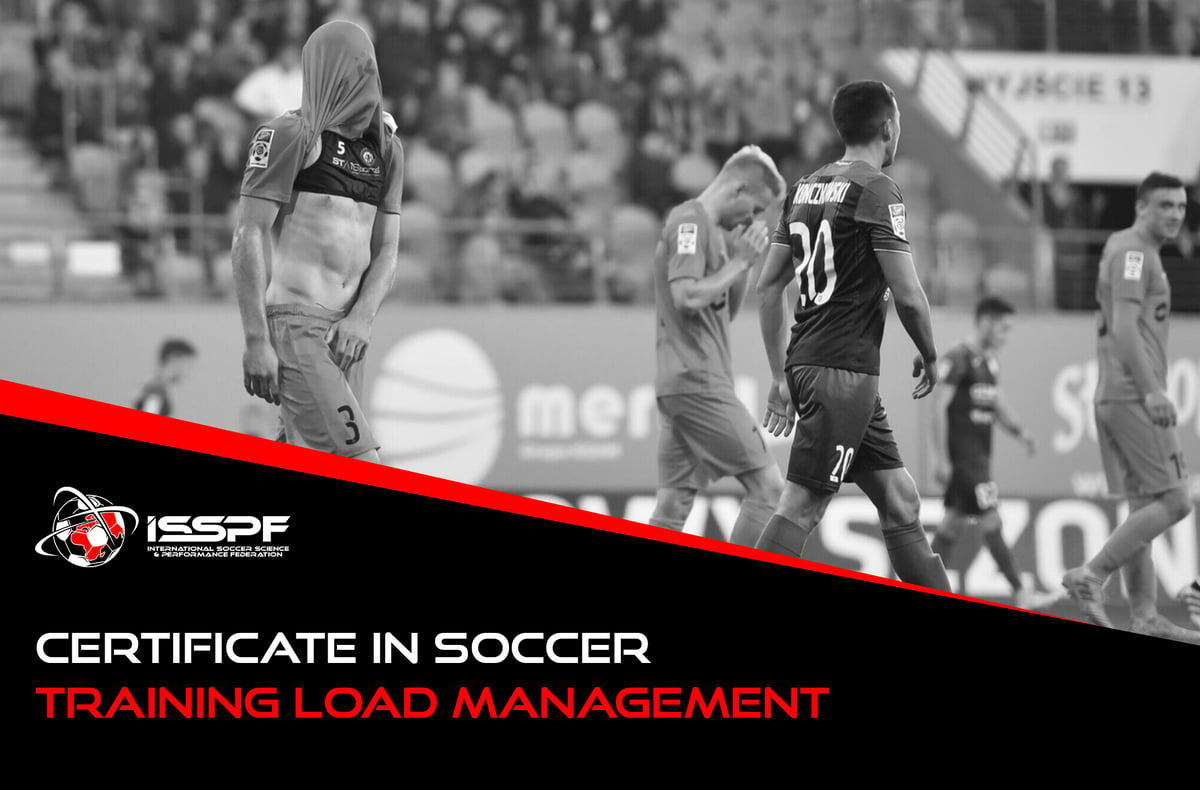
MLS is restarting a season, not beginning one
The MLS situation is different from the traditional European preseason.
The 2026 MLS regular season started in February before pausing towards the end of May. League action began returning in mid-July, creating an interruption of almost two months during the middle of the competitive campaign.
A mid-season restart creates a specific load-management problem.
Players who represented their countries at the World Cup may return with substantial match exposure, international travel, emotional fatigue and limited opportunity for complete recovery. Players who remained with their MLS clubs may have completed carefully organised training blocks and friendly matches, but their recent exposure to full competitive intensity could be lower.
Other players may have used the pause to recover from injury. Some could have completed individual programmes away from the club, while new signings may arrive from active leagues and possess a completely different workload history.
This means an MLS squad could contain several physical profiles at the same time.
A World Cup player may require recovery and gradual reintegration.
A non-international may require renewed competitive exposure.
A player returning from injury may need controlled progression.
A new signing may already be conditioned for competition.
Another player may have trained consistently but completed limited meaningful match minutes.
These players cannot be managed through one generic restart programme.
The coaching staff must understand what each player has actually done, not what the team schedule says they should have done.
Match minutes, training exposure, high-speed running, sprint distance, acceleration and deceleration demands, strength work, travel, sleep disruption and subjective fatigue all contribute to the player’s current readiness. No single metric provides the complete answer.
The central objective is to reconnect every player with the demands of MLS competition without producing an unnecessary jump between what the player has recently tolerated and what the restart immediately requires.

Europe’s preseason is shorter for some players than others
The 2026 FIFA World Cup final took place in July, with several domestic competitions scheduled to begin only weeks later.
Although some leagues have attempted to provide additional recovery time following the tournament, the preparation period remains extremely short for players involved in the latter World Cup rounds.
The phrase “preseason squad” can therefore be misleading.
Many clubs will begin training without all their international players. When those players return, they may be reintroduced while teammates are already completing full sessions and playing preparation matches.
The temptation is to accelerate the returning player’s programme so they can catch up. Yet the returning international may not need to catch up physically. They may need to recover, restore movement quality, rebuild strength exposure and gradually reconnect with the club game model.
Meanwhile, a player who has completed an extended summer break may require a progressive increase in soccer-specific conditioning before being exposed to repeated high-speed actions or full match minutes.
This is why preseason planning must be individualised within a collective methodology.
A squad may train together, but players can receive different exposure through modified spaces, altered repetition numbers, controlled match minutes and individual top-up or recovery work.
The most important question is not whether a player completed the session.
It is whether the session delivered the appropriate stimulus for that player.

Japan’s calendar change creates a unique physical transition
The J.League’s transition is one of the most important structural developments in world soccer.
From the 2026–27 season, the competition will operate on an August-to-May calendar, with a winter break incorporated into the schedule. The change brings Japanese professional soccer closer to European and Asian continental competition structures.
To bridge the transition, Japanese clubs participated in a one-off competition during the first half of 2026 before preparing for the new campaign beginning in August.
This creates both opportunity and complexity.
Calendar alignment may support transfer activity, continental competition and cooperation with European clubs. It may also make it easier for players moving between Japan and Europe to transition between seasons with fewer major scheduling conflicts.
However, the first year of any calendar change requires careful physical planning.
Players have experienced an unusual competition structure rather than a normal annual cycle. Some may have competed internationally during the summer. Others may have used the interval after the transitional competition for recovery, individual development or club preparation.
Coaches must therefore resist treating the new season as a completely standard August preseason.
The player’s previous six to eight months matter.
Training-load management should begin with a review of the transitional competition, individual minutes, recent strength and speed exposure, injury history and the length and quality of the player’s recovery period.
Calendar alignment does not automatically create physical alignment. The training process must still connect each player’s past exposure to the future demands of the new season.
Why sudden training increases may raise injury risk
Training is necessary to improve fitness and build physical resilience. The objective of load management is not to protect players from demanding work.
It is to expose them to demanding work progressively enough that they can adapt.
Large and rapid increases in workload have been associated with greater non-contact injury risk in some professional soccer environments. The risk may become particularly relevant when a player moves suddenly from a period of low exposure into repeated high-intensity training and competitive match demands.
Players who have been consistently exposed to suitable training may be better prepared to tolerate demanding periods than players entering the same period from a low recent workload.
This is an important distinction.
High load is not automatically dangerous, and low load is not automatically safe.
A player who is repeatedly protected from high-speed running, maximal velocity and demanding soccer actions may become underprepared for match play. The injury concern can emerge when competition suddenly supplies loads that training has failed to prepare the player to tolerate.
Preseason training is therefore necessary.
The message is not to reduce training indiscriminately.
It is to build capacity before asking the player to repeatedly express that capacity in competition.
At the same time, coaches should be cautious about relying on a single workload ratio or universal numerical threshold. Injury is multifactorial, and no isolated number can predict exactly when a player will be injured.
Load monitoring should inform decisions, not replace professional judgement.
The danger of treating every returning player identically
The global restart creates a clear example of why group averages can be misleading.
Imagine two players reporting for the same Premier League preseason session.
The first completed six World Cup matches, including extra time, before taking a short recovery period. The second finished club competition in May and has completed an individual off-season programme without full match exposure.
Both may be available for training, but they are not arriving from the same starting point.
The first player could possess strong match conditioning but carry substantial residual fatigue. The second may feel fresh but require progressive exposure to match-speed actions, body contact, rapid decision-making and repeated changes of direction.
Giving both players exactly the same additional running may fail both of them.
The World Cup player may receive unnecessary volume when recovery is the priority. The returning club player may complete general conditioning without gaining enough soccer-specific sprint and match exposure.
The same issue exists within MLS. International players return from continuous competition while non-internationals return from a long match interruption.
In Japan, a player who featured heavily in the transitional competition may require a different progression from a teammate who played limited minutes or spent the interval in rehabilitation.
New transfers create another layer.
A player moving from MLS to Europe is transferring from the middle of one season into the beginning of another. A European player joining MLS may arrive with preseason conditioning but limited recent competitive minutes. A player moving to Japan must now adapt to the league’s new calendar as well as a different tactical, cultural and environmental setting.
The coaching staff should therefore create an individual load profile or load passport.
This should summarise recent match minutes, training availability, high-speed and sprint exposure, strength work, injuries, rehabilitation history, travel and subjective readiness.
The more complex the calendar becomes, the more important this individual history becomes.

High-speed running cannot be introduced accidentally
High-speed running and sprinting deserve particular attention during preseason and competition restarts.
These actions are decisive within modern soccer. Players need speed to press, recover, attack space, defend transitions and perform repeated role-specific movements.
Yet high-speed exposure can be poorly managed in two different ways.
The first mistake is introducing too much too quickly. A player with limited recent sprint exposure may suddenly complete a large-pitch session, repeated transition games and substantial friendly-match minutes within the same week.
The second mistake is avoiding speed work almost completely in an attempt to reduce injury risk.
This can leave the player unprepared for the first competitive match, where tactical situations will naturally create maximal or near-maximal running.
The solution is planned exposure.
Coaches and performance practitioners should know which sessions are likely to produce high-speed running and which positional groups may not reach the required stimulus naturally.
A central defender in a compact small-sided practice will not experience the same sprint demand as a winger repeatedly attacking a large transition space.
The ISSPF article High-Speed Running Training in Elite Professional Soccer explores how high-speed exposure can be planned to support performance rather than appearing unpredictably within training.
The broader ISSPF article Managing Training Load in Elite Football also examines practical external-load indicators, including total distance, high-speed running and acceleration and deceleration demands.
The coach does not need to remove sprinting.
The coach needs to know when, why and how much sprinting is being delivered.
Friendly matches must be loaded, not merely scheduled
Preseason matches are often organised for tactical preparation, commercial tours and supporter engagement.
From a physical perspective, however, every friendly should have a defined purpose.
A player completing 30 minutes in the first match, 45 in the second, 60 in the third and a longer exposure before the opening league game may follow an appropriate progression. But minutes alone do not describe the complete load.
Thirty minutes in a highly transitional match may produce more high-intensity activity than 60 minutes of controlled possession. Travel, heat, surface quality and the number of training sessions surrounding the match can also change the overall demand.
Staff should therefore plan the friendly schedule alongside the training week.
If a match delivers substantial sprinting and deceleration, the next session should reflect that information. If a substitute completes only ten minutes, compensatory training may be required to prevent the player’s weekly load falling too far below that of the starters.
This becomes particularly important once the season begins.
Players who regularly start matches receive a large proportion of their conditioning through competition. Non-starters may appear fresh but can gradually lose the physical capacity required to perform when selected.
The ISSPF article Competitive Soccer Training Microcycle: Structure and Justification examines how match demands, monitoring information and individualised training can be integrated into the weekly process.
Internal and external load must be interpreted together
Professional clubs increasingly monitor external load through GPS and tracking systems.
These systems can quantify total distance, high-speed running, sprint distance, accelerations, decelerations, peak speed and other movement outputs.
External load explains what the player did.
Internal load helps explain how the player responded.
Heart rate, session rating of perceived exertion, wellness, sleep quality, muscle soreness and psychological fatigue can all add important context. Two players may complete the same external work but experience it very differently.
One may be well conditioned and recover quickly. The other may have recently travelled across several time zones, slept poorly and be experiencing residual fatigue.
Monitoring becomes valuable when information changes a decision.
Data should help the staff modify a session, adjust a player’s volume, add an individual stimulus, protect recovery or identify the need for further medical assessment.
The ISSPF article Appropriate Training Loads in Team Sports describes load management as the organisation of training frequency, duration and intensity to build fitness while supporting player availability.
The objective is not to build the biggest dashboard.
It is to make better coaching decisions.
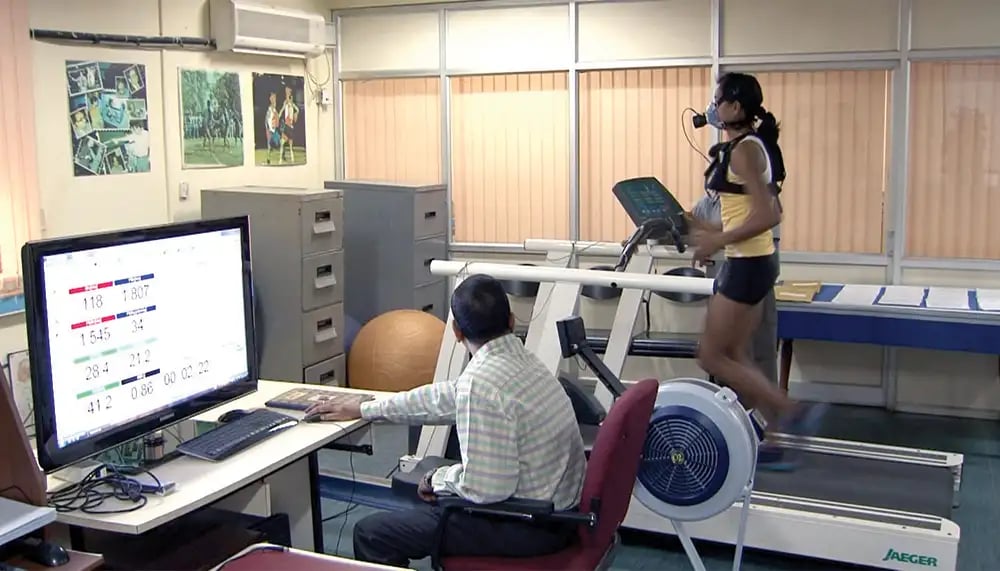
Methodology must connect the physical plan to the game model
Load management cannot sit separately from soccer coaching.
A coach may receive an instruction that the team requires a high-load session, but the football content still matters. The size of the pitch, player numbers, rules, work periods and tactical objective all shape the physical outcome.
Small-sided games can create repeated accelerations, decelerations and duels. Larger spaces may expose players to higher speeds. Tactical practices with frequent restarts can create different loading patterns from continuous transition games.
The physical requirement must therefore be translated into a meaningful soccer practice.
The ISSPF article A Modern Soccer Coaching Methodology explains why the game model should guide training design. A pressing team must repeatedly practise pressing actions, while a transition-focused team must prepare players for the running and decision-making demands that support transition football.
Similarly, Periodisation for Soccer explores how macrocycles, mesocycles and weekly microcycles can organise workload and recovery, with training volume reduced towards competition while sufficient intensity is retained to preserve readiness.
The physical plan and tactical plan should not compete.
They should describe the same preparation process from different professional perspectives.
Prepare for the season without sacrificing availability
The MLS restart, the opening of the EFL and European seasons and the J.League calendar transition create different scheduling problems, but the central coaching principle remains consistent.
Players must be prepared progressively for what competition will demand.
MLS clubs must reconnect non-international players with match intensity while carefully reintegrating players returning from the World Cup.
European clubs must manage preseason squads containing tournament players, rested players, new transfers, academy prospects and players returning from injury.
Japanese clubs must interpret an unprecedented transitional year before beginning the first full J.League season aligned with the August-to-May calendar.
In each environment, poor planning can create unnecessary spikes in volume, intensity or match exposure.
Effective planning does not mean training less. It means building the right qualities at the right time, understanding each player’s recent history and maintaining enough recovery for adaptation to occur.
The ISSPF Certificate in Soccer Training Load Management provides coaches and performance practitioners with applied education in player testing, monitoring, injury-reduction strategies, external load, subjective effort assessment and competitive microcycle planning.
The course is designed for coaches working at all levels who want practical methods for balancing fitness, freshness and performance.
The ISSPF Certificate in Physical Training and Soccer Methodology develops the relationship between physical preparation and the coaching process. Its content includes tapering, periodisation, game-model development, individualised planning, maximal-intensity conditioning, session design and the competitive microcycle.
As competitions restart across North America, Europe and Asia, player availability may become one of the most important competitive advantages of the new season.
The clubs that manage this period effectively will not simply be those that complete the hardest preseason.
They will be the clubs that understand where every player is starting, what the game will demand and how to bridge the distance between the two without asking the body to adapt faster than it safely can.
Courses covered in this article
Certificate in Soccer Training Load Management
The ISSPF online Soccer Load Management course exposes you to the specific methods and processes used by elite level coaches to plan and monitor the training load of players and teams.
View Details
Certificate in Physical Training & Soccer Methodology
How do you achieve and manage the balance between physical and tactical training? This course answers that question and takes you through soccer-specific physical training and soccer methodology, as well as how to enhance the performance of your players.
View Details
Did you enjoy this article?
Thanks for your feedback!