
What CONMEBOL’s Proposal Could Mean for Players, Coaches and the Global Game
CONMEBOL has renewed its call for a 64-team FIFA World Cup in 2030. The idea promises wider global access and a bigger centenary celebration, but it also raises serious questions about tournament design, qualification, travel, player preparation and the balance of power across world soccer.
The first 48-team FIFA World Cup had barely finished when the next expansion debate began. On 20 July 2026, CONMEBOL president Alejandro Domínguez called for the 2030 centenary tournament to include 64 national teams. FIFA has not approved that format, and the proposal remains under discussion, but its timing ensured that it immediately became one of the biggest strategic conversations in world soccer. (Reuters)
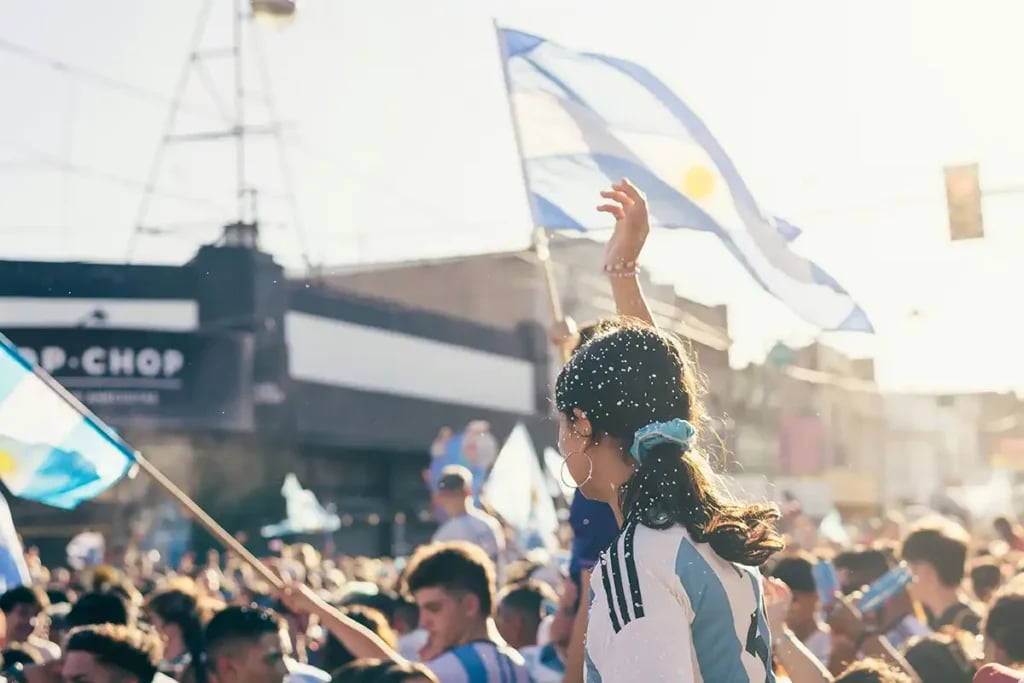
The symbolism is obvious. The World Cup began in Uruguay in 1930, and the approved 2030 hosting plan places the main tournament in Morocco, Portugal and Spain while Argentina, Paraguay and Uruguay each stage a centenary celebration match. For South American soccer, a larger competition can be presented as a once-in-a-century opportunity to bring more countries into the celebration and strengthen the World Cup’s global reach. (Inside FIFA)
From a coaching and performance perspective, however, the debate cannot be reduced to whether 64 sounds more inclusive than 48. Tournament expansion changes the competitive ecosystem surrounding the event. It affects qualification, squad planning, training-base capacity, match scheduling, travel, recovery, commercial value and the relationship between club and international soccer.
The key question is therefore not simply whether FIFA can organise a 64-team World Cup. It is whether the sport can design one that protects quality, creates genuine development value and treats player preparation as a central part of the model.
A Centenary Proposal Carrying More Than Symbolism
The approved 2030 World Cup is already unprecedented. It will connect six countries across three continents, with the centenary matches in South America preceding the main competition in Morocco, Portugal and Spain. That arrangement gives Uruguay a direct place in the celebration of the tournament it hosted and won in 1930, while recognising Argentina and Paraguay within the wider South American centenary concept.
Domínguez’s renewed proposal asks FIFA to go further by expanding the field from the 48 teams used in 2026 to 64. FIFA president Gianni Infantino had already acknowledged that the idea could be examined, but no final format, allocation model or approval has been confirmed. That distinction is essential. At present, 64 teams represent an active proposal rather than the official structure of the 2030 World Cup. (Reuters)
The case for expansion begins with access. A World Cup place can accelerate interest, participation, sponsorship and government attention within an emerging soccer nation. It can give a federation a clearer development target and create a visible pathway for young players who might otherwise see the World Cup as permanently beyond their reach. More places would also reduce the likelihood that a commercially important or historically successful nation misses the finals.
Qualification can force a federation to improve coach education, talent identification, medical support, analysis and long-term planning. A World Cup team needs more than talented players; it needs a functioning performance system.
Yet access and development are not automatically the same thing. Additional places only create lasting value when federations invest before and after the finals rather than treating qualification as the end of the process.
There is also an economic issue. Qualification tournaments generate broadcasting, sponsorship and matchday income for regional confederations. If entry to the World Cup becomes easier for the largest markets, qualifying campaigns may lose some jeopardy and therefore some commercial appeal. At the same time, FIFA’s own tournament would become bigger and potentially more valuable, concentrating more of the game’s financial influence around the finals themselves. (Reuters)
That is why this discussion belongs as much in the boardroom as it does on the pitch. Coaches may see additional opportunities for nations and players, but administrators must consider governance, revenue distribution and the sustainability of domestic and international competitions.
ISSPF’s Certificate in Soccer Business & Management provides a relevant educational route for practitioners who want to understand the governance, regulation, finance, strategy and sport-development questions behind decisions of this scale. The course examines the organisation and management of soccer-related entities, including governance, revenue generation, strategic management and sustainable development. (ISSPF)
The Coaching and Performance Challenge Behind a Possible 128-Match Tournament
The 2026 World Cup demonstrated how quickly expansion changes the operational demands of a competition. Forty-eight teams played 104 matches across 12 groups of four, with the top two teams and eight best third-placed teams advancing to a round of 32. The finalists consequently had to play eight matches rather than the seven required under the former 32-team structure. (FIFA)
FIFA has not published a 64-team format for 2030. However, if it used 16 groups of four followed by a 32-team knockout phase, the tournament would contain 128 matches. That would be 24 more than in 2026 and twice the 64 matches staged under the old 32-team format.
The eventual finalists could still play eight matches, so the individual match demand on those two teams would not necessarily increase from 2026. The wider performance problem is the size and potential duration of the whole operation. Unless matches were compressed or played simultaneously, an additional 24 fixtures could extend an event that already lasted more than five weeks in 2026. (Reuters)
More teams mean more squads arriving from different domestic calendars and stages of preparation. Some players will finish long European seasons; others will arrive from leagues operating on different cycles. National-team staff would need detailed profiles covering match minutes, training exposure, high-speed work, injury history, travel, sleep and recovery.
The challenge is to build one team while recognising that 26 players may require several different loading strategies.
That makes communication between clubs and national teams even more important. The player does not become physiologically new when changing badge. The load accumulated with the club travels into the international environment, and the fatigue created during the World Cup returns to the club.
A responsible model requires transparent information sharing and a clearer understanding of who owns the long-term duty of care.

Training quality would become more important than training volume. Coaches have limited time to develop tactical understanding, rehearse plans and maintain physical qualities. Periodisation therefore becomes a soccer decision: when to train aggressively, reduce volume, use tactical walkthroughs or rotate the team.
ISSPF’s work on managing in-season soccer periodisation explains how tactical intent and physiological preparation can be aligned when the calendar leaves little margin for error.
Travel may be the most unusual feature of the 2030 plan. The approved centenary structure places one celebration match in each of Argentina, Paraguay and Uruguay before most of the tournament continues in Morocco, Portugal and Spain. The exact team movements and schedule are not confirmed, but the organisers will need to prevent the symbolism of the centenary from creating an avoidable competitive disadvantage. (Inside FIFA)
A team asked to play in South America and then relocate across the Atlantic would face a different preparation problem from a team beginning in the main host region. Flight duration, time-zone change, sleep timing, training access and the interval before the next match would all matter.
The fairest solution would require the schedule to be built around recovery, not simply ceremony or television preference.
A 64-team tournament would also require more training centres, medical facilities, hotels, transport and recovery spaces. Each team needs an appropriate pitch, gym access, treatment areas, nutrition provision and workable journey times. Performance can be undermined before kick-off if those environments are inconsistent.
Player welfare therefore cannot be judged only by counting the maximum games played by the eventual champion. The wider calendar footprint matters, as do the recovery periods immediately before and after the tournament.
FIFPRO’s workload monitoring has highlighted the effects of continuous competition cycles, inadequate off-season recovery and restricted preseason preparation. Its 2025 workload report, based on players monitored across elite soccer, referenced a consensus among performance and medical experts supporting minimum off-season and preseason periods. (FIFPRO)
For coaches and practitioners, the practical response is not to reject every new competition. It is to demand that competition design includes performance expertise from the beginning.
ISSPF’s Certificate in Soccer Training Load Management and its analysis of fixture congestion in international soccerprovide relevant development for staff working within increasingly compressed calendars.
Inclusion, Competitive Quality and the Decision FIFA Must Make
The most persuasive case for a 64-team World Cup is that the global game should create meaningful opportunities for more nations. Soccer has grown far beyond its traditional centres, while improved coaching, player migration, academy development and access to performance technology have reduced some historical gaps.
A nation should not be dismissed simply because it lacks World Cup pedigree.
First-time qualifiers can bring new supporters, tactical identities and cultural energy, inspiring participation at home and broadening the international game. From that perspective, greater representation has an attractive logic.
Competitive integrity remains the counterweight. The World Cup must still feel like the highest level of international soccer. If expansion produces too many one-sided matches, weakens qualification or allows poorly prepared federations to arrive without adequate support, access may come at the cost of the competition’s credibility.

The answer is not to assume that unfamiliar teams will be uncompetitive. It is to design qualification and tournament structures that reward genuine progress.
FIFA would therefore need to explain more than the headline number. How would the 64 places be allocated? Would each confederation receive the same percentage increase? How would qualification retain sporting jeopardy? Would 16 groups of four send only the top two into the knockout phase, removing the best-third-place system used in 2026? How long would the tournament last? How would centenary-match travel be managed? What minimum standards would apply to training bases and recovery time?
The answers should be tested against clear principles.
First, the competition must be fair. Teams should face comparable recovery windows and travel demands.
Second, it must protect performance quality. The schedule should allow players to produce elite soccer rather than merely survive the event.
Third, it must create sustainable development. New World Cup places should be accompanied by investment in coaching, facilities and domestic pathways.
Fourth, the financial benefit should support the wider game rather than weaken the competitions that sustain players throughout the four-year cycle.
A larger finals field would give World Cup experience to hundreds of additional players and staff, potentially raising standards when they return to domestic soccer. That experience only becomes valuable when federations support it with preparation camps, analysis, medical planning, nutrition, logistics and strong leadership.
Qualifying is not the finish line; it begins a wider development responsibility.
The debate also highlights why modern coaches need knowledge beyond tactics. Decisions made in governance rooms shape the number of matches, recovery windows, travel schedule and resources available to the technical staff. Understanding soccer business and understanding player performance are no longer separate professional worlds.
That connection is explored in the ISSPF Soccer Insights Podcast episode with Jack Sharkey, which examines how sport science becomes useful when information is translated into decisions that help players, coaches and teams perform. A 64-team World Cup would present exactly that challenge on a global scale: more information, more logistical complexity and more pressure, but still a need for clear and practical decision-making. (ISSPF)

CONMEBOL’s proposal has succeeded in opening a major conversation. It links South America’s ownership of World Cup history with a modern argument for inclusion. Yet the centenary cannot be protected by size alone. The 2030 tournament will be judged by the quality of its competition, the fairness of its structure and the legacy it leaves in every participating nation.
A 64-team World Cup could become a powerful global-development event. It could also create a longer and more commercially concentrated tournament within an already crowded soccer calendar.
Both outcomes are possible.
The difference will be determined by the detail: qualification design, scheduling, revenue distribution, infrastructure, travel planning and genuine player-welfare safeguards.
For coaches, sport scientists, analysts and soccer leaders, this is not a distant administrative debate. It will influence how national teams are built, how players are prepared and how the entire sport balances ambition with sustainability.
Explore ISSPF’s internationally accessible soccer coaching and performance courses to develop the knowledge required to work across coaching, performance, load management and soccer business in a global game that continues to change.
Courses covered in this article
Certificate in Soccer Business & Management
Learn the business side of soccer with the Certificate in Soccer Business & Management. This course outlines the fundamentals of sport management in order to apply the effective organization and management of a soccer club or soccer-related entity.
View Details
Certificate in Soccer Training Load Management
The ISSPF online Soccer Load Management course exposes you to the specific methods and processes used by elite level coaches to plan and monitor the training load of players and teams.
View Details
Did you enjoy this article?
Thanks for your feedback!