
Why Nine of Ten Teams Reached the Knockout Stage—and What Must Happen Before 2030
Africa produced its strongest collective World Cup performance in 2026, with nine of ten teams progressing beyond the group stage. The achievement reflects growing competitiveness across the continent, but the results also exposed the next challenge: converting wider participation and competitive performances into sustained progress during the decisive knockout rounds.
Nine teams progressing from ten entries is a World Cup statistic that demands attention.
At the 2026 tournament in Canada, Mexico and the United States, Algeria, Cabo Verde, Côte d’Ivoire, DR Congo, Egypt, Ghana, Morocco, Senegal and South Africa all advanced beyond the group stage. Tunisia were the only African representatives not to reach the Round of 32.
CAF calculated that its teams represented 20.8% of the original 48-team field but accounted for 28.1% of the countries entering the knockout phase. The 90% progression rate was the highest achieved by Africa in World Cup history. Egypt continued into the Round of 16, while Morocco reached the quarter-finals for the second successive tournament.
Those figures provide an important moment of recognition for African soccer. They also require careful interpretation.
The expanded World Cup created more places for African countries and introduced a Round of 32 in which eight of the twelve third-placed group teams could progress. Four African nations used that route, while five qualified as group runners-up. The format undoubtedly increased opportunity, but opportunity does not guarantee results. Teams still had to collect points, manage critical moments and compete against countries with greater historical resources and deeper tournament experience.
Africa therefore achieved something meaningful. It demonstrated greater competitive breadth than in previous tournaments and showed that more of its national teams can survive the first stage of the World Cup.
The more difficult question is what happens next.
A Historic Collective Performance—but Not Yet a Finished Development Story
The contrast with recent World Cups is significant.
In 2018, none of Africa’s five representatives progressed beyond the opening stage. At the 2022 tournament, Morocco became the first African nation to reach a World Cup semi-final, but only two of the five African teams advanced from their groups. Four years later, nine teams reached the knockout rounds. That change cannot be explained entirely by the expanded competition. The new format created a more accessible pathway, but African teams still produced enough competitive performances to take advantage of it.
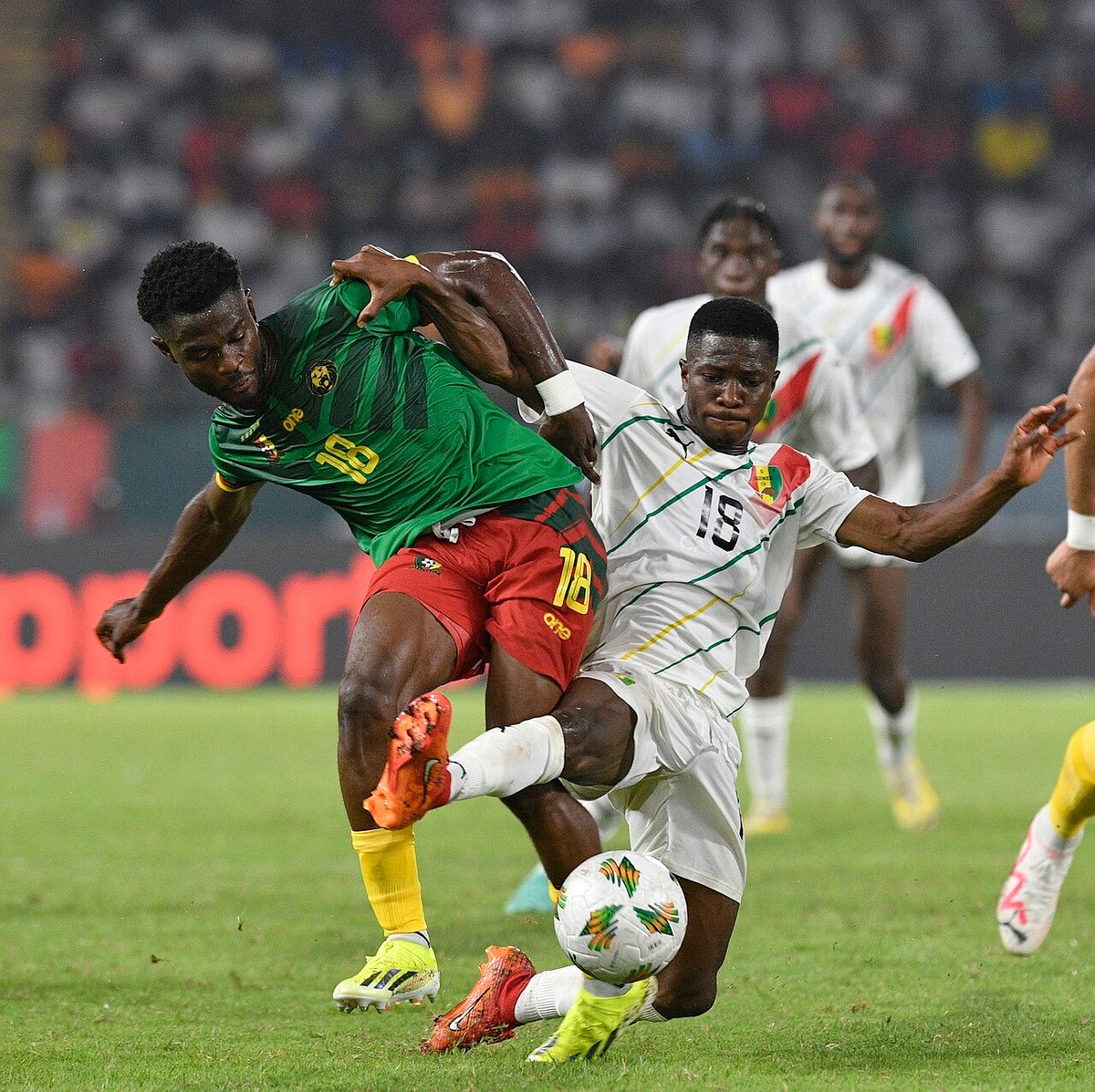
Cabo Verde, competing at their first World Cup, held former champions Spain and Uruguay in the group stage before taking Argentina to extra time in the Round of 32. Egypt won a World Cup match for the first time and were minutes away from eliminating Argentina in the last 16. DR Congo, Côte d’Ivoire and Senegal all placed strong opponents under considerable pressure, although each experienced moments in which winning positions or opportunities slipped away.
These performances suggest that the competitive gap is no longer defined simply by whether African teams can match leading nations for parts of a game. Many can.
The next gap concerns whether those performances can be sustained across the full match, repeated every few days and delivered through several knockout rounds.
That distinction matters. Progressing from a four-team group and winning five consecutive knockout matches are very different tournament demands. The expanded competition added another knockout round and lengthened the World Cup schedule. Coaches increasingly had to manage rotation, recovery and game risk rather than trying to produce maximum-intensity performances in every phase of every match.
Africa’s 2026 results demonstrated depth across the continent, but the later rounds still belonged predominantly to the game’s traditional powers. Morocco were the only African team to reach the quarter-finals, and the continent was not represented in the last four.
That does not diminish the achievement. It defines the next benchmark.
The 2026 breakthrough should not be judged only through celebration or disappointment. It should become a large-scale technical case study covering nine different qualification stories, ten different preparation processes and a wide range of tactical, physical and organisational environments.
There is no single African soccer model. North, West, Central, East and Southern Africa contain different leagues, resources, coaching traditions, player pathways and cultural contexts. Even within the same region, one federation may have developed a stable technical programme while another remains vulnerable to leadership changes, limited facilities or inconsistent preparation.
CAF’s review must therefore avoid reducing the tournament to broad statements about African athleticism, passion or talent. These descriptions are too general to guide professional development.
The questions must be specific.
Which teams established clear playing principles despite limited national-team training time? Which managed different game states most effectively? Which squad-selection models produced the necessary positional depth? Which teams used substitutions well? How successfully were domestic and overseas-based players integrated? What support was available in analysis, nutrition, recovery, psychology, medicine and physical preparation?
The answers will vary between countries, but the process of asking them can create shared learning.
The ISSPF Certificate in Soccer Science and Performance is based on this integrated view of modern soccer. High-level performance does not come from one department working independently. It requires coaches and practitioners to understand how the technical, tactical, physical, psychological and organisational components influence one another.
Africa’s World Cup should be evaluated in the same way.
Africa’s 2026 World Cup performance demonstrated greater competitive depth, but progressing consistently into the final rounds remains the next challenge.
What the 2026 World Cup Revealed About Coaching and Performance
One of the most important lessons from the tournament is that national-team success depends on clarity.
International coaches do not have the daily contact time available to club coaches. Players arrive from different leagues, tactical structures, physical programmes and stages of their domestic seasons. A coach may have only a small number of meaningful training sessions before a major fixture.
Complexity can therefore become an opponent.
Successful national teams require a game model that is detailed enough to provide solutions but simple enough to be understood and delivered under pressure. Players need clarity about the team’s preferred build-up, pressing triggers, defensive distances, transition responsibilities, set-piece roles and behaviour when the score changes.
The task is not to copy a club methodology into an international camp. It is to identify the principles that provide the greatest competitive return within restricted preparation time.
The collective African performance suggests that several teams were capable of arriving at matches with workable structures and enough tactical organisation to remain competitive. However, the knockout results also showed how quickly games can be lost when concentration, spacing or decision-making decline during decisive moments.
Egypt led Argentina 2–0 with approximately eleven minutes remaining in their Round-of-16 match before losing 3–2. Senegal surrendered a two-goal advantage against Belgium late in another knockout contest, while DR Congo and Côte d’Ivoire also experienced costly late-game moments.
Those results should not automatically be described as physical failures. A late goal can emerge from tactical decisions, emotional responses, opponent quality, individual errors, substitutions, accumulated fatigue or a combination of factors.
They do, however, show why game-state training deserves a central place in national-team preparation.
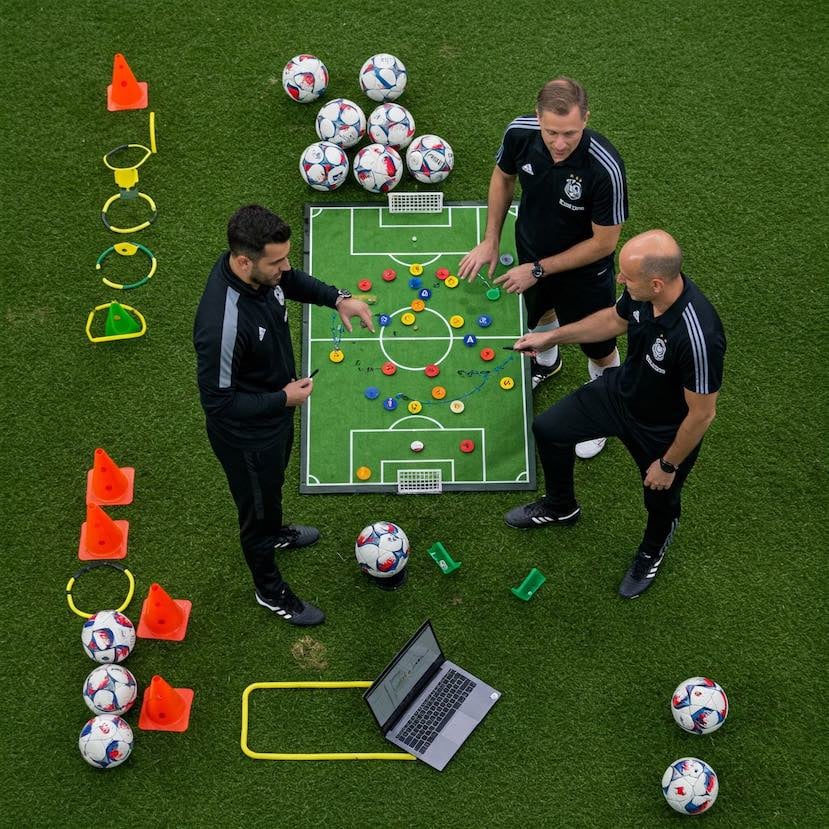
Coaches need to rehearse what the team does when leading with fifteen minutes remaining. Does the defensive line drop or maintain its height? How does the team protect central spaces? Where does the counter-attacking threat come from? Which players provide control after regaining possession? When should the team slow the match and when should it continue attacking?
These scenarios should be trained rather than left to instinct.
Performance analysis can support that process by identifying how opponents change their structure when losing, which players receive more touches during the final stages and where additional numbers are introduced. The analyst’s work must then be translated into clear coaching messages.
ISSPF’s Foundation Certificate in Soccer Performance Analysis helps coaches and analysts connect match information with practical decisions. The value of analysis does not lie in producing the largest report. It lies in identifying the information capable of changing player behaviour.
Squad construction is equally important.
A longer World Cup places pressure on positional depth. Teams progressing from the group stage now face five knockout matches if they are to win the tournament. Injuries, suspensions, fatigue and tactical changes can expose a squad that appears strong on paper but lacks suitable alternatives for specific roles.
National teams must select more than their best individual players. They need a balanced group that can operate within the chosen game model, adapt to different opponents and provide tactical options from the bench.
This requires alignment between scouting, coaching, analysis and performance departments long before the tournament begins. Decisions about dual-national players, younger prospects and experienced leaders cannot be made only during the final preparation camp.
The growth of African players across major international leagues provides national teams with a wider pool of high-level experience. Yet assembling talented players from Europe, Africa, Asia, North America and the Middle East does not automatically create a connected team.
Role clarity remains essential. So do leadership, trust and a shared understanding of what representing the national team requires.
Morocco continue to offer the most established African example of sustained international progression. They followed their 2022 semi-final with another quarter-final appearance in 2026 and became the first African country to reach the World Cup’s last eight more than once. Their recent development has also included government-backed investment in youth structures and success at Under-20 level. (FIFA)
Other federations should study that continuity, but they should not attempt to copy Morocco without considering their own resources, player population and competitive environment.
The transferable lesson is not one formation or training method. It is the value of connecting youth development, coach education, infrastructure, national-team planning and performance support through a long-term strategy.
That connection is central to the ISSPF Foundation Certificate in Soccer Coaching, Periodisation and Game Model Development, which helps coaches build a repeatable framework linking playing principles, training design and match-day performance.
Clear playing principles and rehearsed game-state strategies are essential when national-team coaches have limited training contact with their players.
Physical preparation must also be assessed within the reality of the international calendar.
Players arrived at the World Cup after different club schedules and levels of match exposure. Some had accumulated demanding seasons, while others had experienced reduced minutes, injuries or different competition cycles.
A national-team performance department must individualise preparation without fragmenting the squad. One player may require recovery, another a training stimulus and another a gradual return to full match intensity.
The objective is to prepare one team while recognising that the players do not arrive with the same physical history.
Recovery between matches, sleep, travel, nutrition, temperature management and substitute preparation become increasingly important as the tournament progresses. These processes may not attract the public attention given to tactics, but they can determine whether the coach has a physically and mentally available squad.
The best performance departments do not simply report numbers. They help the head coach decide who can train, how hard the team should work and which players may be capable of starting or finishing the next match.
This is particularly relevant for African federations operating with different financial and infrastructural resources. The minimum objective should be a dependable interdisciplinary structure in which coaches, analysts, medical staff, sport scientists and team-management personnel share information and understand their responsibilities.
Progress cannot depend on one exceptional practitioner temporarily filling several roles.
African development strategies must connect youth pathways, coaching quality, physical preparation and suitable training environments.
From a Breakthrough to 2030: What CAF’s Technical Review Must Deliver
CAF’s decision to hold a continental technical conference is potentially more important than the celebratory headline.
The confederation has stated that national-team coaches, technical teams, former internationals and other experts will be invited to assess the 2026 performances and develop recommendations for 2030. CAF has also identified coach education, youth development, professional leagues, schools soccer and infrastructure as continuing strategic priorities. (Confédération Africaine de Football)
The quality of the review will depend on whether it produces measurable actions rather than a general summary.
The first requirement should be an evidence-led tournament audit.
Each country should evaluate its performances by phase of play, game state and opposition level. The review should include chance creation, defensive stability, transitions, set pieces, substitutions, squad use, physical availability and the timing of goals conceded or scored.
African teams should identify not only what happened but why particular decisions succeeded or failed.
The second priority is coaching continuity.
National teams cannot build a recognisable identity when coaches and technical staff are replaced continually without a wider methodology remaining in place. A federation may change its head coach, but its principles for player development, information management and performance support should not disappear with one appointment.
Technical directors and federation leaders must define what continuity means in their own environments. It does not require every age group to use the same formation. It requires shared principles, clear player profiles and an agreed pathway from youth to senior international soccer.
Third, Africa must convert World Cup visibility into youth-development investment.
CAF has highlighted the African Schools Football Championship as an important platform and has stated that it intends to increase coaching provision across its six regional zones. These initiatives should be connected with federation academies, domestic clubs and age-group national teams rather than operating as isolated competitions.
Young players require appropriate coaching, competition, physical development and educational support. Accelerating talented players too quickly can be as damaging as failing to challenge them.
The ISSPF Certificate in Youth Soccer Athletic Development supports coaches in understanding maturation, long-term development, training design and the balance between technical, tactical and physical preparation.
Fourth, stronger domestic soccer environments are required.
International success cannot be sustained entirely through exporting the most talented players. Overseas experience can raise standards, but domestic clubs remain essential for identifying players, educating coaches and providing meaningful competition.
Federations need reliable leagues, suitable pitches, medical provision and competition structures that give young players a realistic pathway into senior soccer.
CAF has acknowledged the importance of stadiums that meet continental and international requirements, as well as stronger partnerships between federations, governments and the private sector. Infrastructure is not simply a hosting issue. It influences where national teams train, whether clubs can play at home and the standard of the daily development environment. (Confédération Africaine de Football)
The fifth priority is accessible coach and practitioner education.
The performance of African national teams will ultimately reflect the quality of work completed across thousands of clubs, academies and community programmes. Elite success begins far below the senior international level.
ISSPF’s continuing partnership with the Council of Southern Africa Football Associations has supported the development of the COSAFA–ISSPF Diploma in Soccer Science and Performance Coaching. The programme brings together coaching, physical preparation, nutrition, psychology and soccer-science education for practitioners within the region. (ISSPF)
This partnership should not be presented as a cause of Africa’s World Cup results. It is, however, an example of how regional organisations can widen access to contemporary education and create common professional language across countries.
Finally, the road to 2030 must be viewed as more than a four-year senior-team project.
Morocco will co-host the next World Cup alongside Portugal and Spain, placing part of the tournament on African soil and increasing the continent’s expectations.
The aim should not simply be to produce another record number of teams in the knockout stage. The objective should be to increase the number capable of winning knockout matches against elite opposition and maintaining performance through the final weeks of the competition.
That requires greater tactical flexibility, deeper squads, improved game management and stronger organisational support.
Modern stadiums and reliable training facilities form part of the wider infrastructure needed to support sustainable national-team and player development.

Africa’s 2026 World Cup was a breakthrough because success was no longer carried by one country alone.
Nine nations reached the knockout phase. Debutants competed with former champions. Several teams came close to progressing further, while Morocco demonstrated that repeated late-stage qualification is possible.
The tournament also revealed the distance still to travel.
A World Cup winner must perform across eight matches, manage injuries and fatigue, respond to changing opponents and make high-quality decisions in the most pressurised moments. Competitive group performances are the foundation, not the final achievement.
CAF now has an opportunity to turn a historic statistic into a development strategy.
The technical review should be honest enough to recognise the role of the expanded format, ambitious enough to target the final rounds and detailed enough to produce different recommendations for countries operating in very different environments.
African soccer does not lack talent or passion. The challenge is to surround that talent with consistent systems: educated coaches, connected pathways, professional support staff, reliable competitions and stable federation leadership.
The 2026 World Cup showed that Africa’s competitive base is widening.
The road to 2030 must now be about increasing its ceiling.
Coaches, analysts and performance practitioners looking to contribute to that next phase can explore the complete range of ISSPF online soccer coaching, science and performance courses. Through accessible specialist education, ISSPF supports coaches at every level in developing the knowledge required to improve players, teams and soccer organisations across the global game.
Courses covered in this article
Certificate in Soccer Science & Performance
The Certificate in Soccer Science & Performance brings together cutting-edge coaching principles and research-driven training methods to enable coaches at all levels to maximise the performance of their players.
View Details
Foundation Certificate in Soccer Performance Analysis
The Foundation Certificate in Soccer Performance Analysis course is designed to enhance your team's performance and decision-making by enabling you to apply the latest soccer analysis techniques and tactical insights directly to your coaching strategies.
View Details
Foundation Certificate in Soccer Coaching, Periodisation & Game Model Development
Coach with a real framework – not a collection of drills – through a professional certification in Game Model Development and Periodisation, so every session has purpose, every week has structure, and training actually transfers to match performance.
View Details
Did you enjoy this article?
Thanks for your feedback!