
Japan captivated the 2026 FIFA World Cup through technical quality, relentless movement, tactical discipline and a powerful collective identity. Although their campaign ended against Brazil in the Round of 32, Samurai Blue demonstrated how connected youth development, coach education, overseas experience and a clearly defined national playing philosophy can transform a soccer nation.
How Samurai Blue Built One of the World Cup’s Most Exciting Teams
Japan’s soccer development system produced one of the most engaging teams at the 2026 FIFA World Cup.
Samurai Blue played with intensity, technical courage, positional discipline and a collective work ethic that captured international attention. They recovered twice to draw 2–2 with the Netherlands, defeated Tunisia 4–0 and secured qualification with a 1–1 draw against Sweden. Their four goals against Tunisia represented Japan’s highest total in a men’s World Cup match.
The campaign ended in the Round of 32 after Japan took the lead against Brazil but eventually lost 2–1 to a stoppage-time goal. For many observers, the elimination felt premature. Japan had shown enough quality to suggest they were capable of progressing much deeper into the competition. The disappointment was intensified by history. This was Japan’s fifth appearance in a World Cup knockout stage, yet once again the country was unable to move beyond its first elimination match.
However, reducing Japan’s tournament to another early knockout exit would ignore the scale of the progress behind the performance. Japan are no longer attending major tournaments simply hoping to compete against established nations. They are developing a team capable of imposing a recognisable style, adjusting tactically between matches and placing elite opponents under genuine pressure.
That development has not happened accidentally. It reflects a national strategy connecting grassroots participation, youth development, coach education, the J.League, international competition and the increasing movement of Japanese players into European soccer. The result is a national team representing more than a temporary generation of talented players. It is the visible product of a connected football-development system.
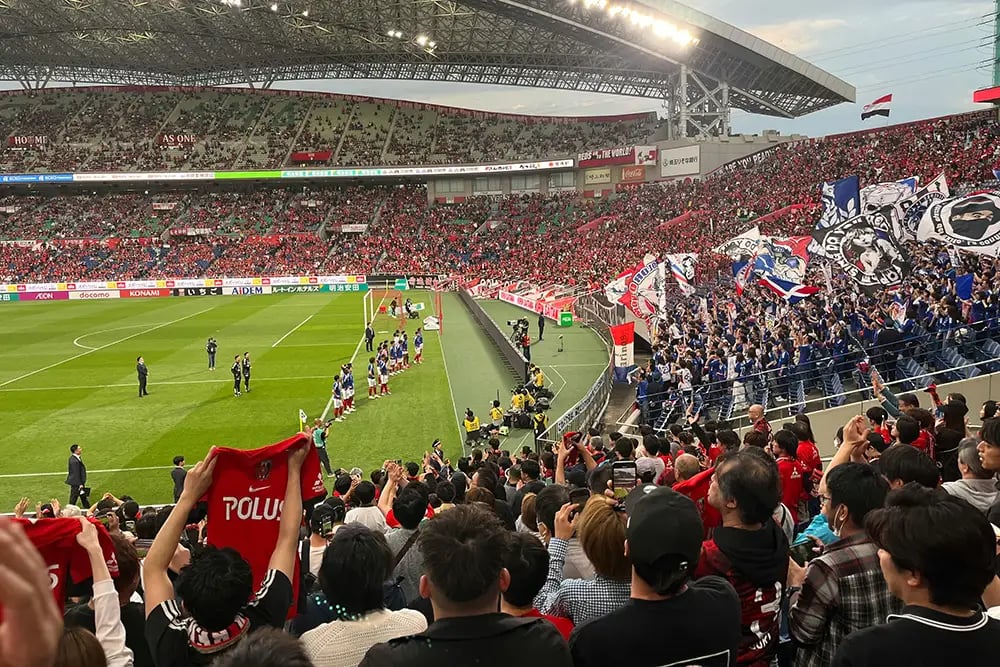
Japan’s Way: a national philosophy rather than a tournament plan
In 2022, the Japan Football Association introduced “Japan’s Way” as a national football philosophy. The strategy was updated in December 2025 and is designed to connect the country’s present football level with its long-term ambition of winning the FIFA World Cup.
The JFA identifies four integrated areas within this development strategy: national teams, youth development, coach education and grassroots soccer. That integration is significant. Many nations develop talented players, organise coaching qualifications or invest in senior national teams. Fewer succeed in connecting these elements through a shared long-term vision.
Japan’s approach recognises that senior international performance cannot be separated from what happens much earlier in the pathway. The identity of the national team is influenced by the quality of grassroots access, the development of young players and the knowledge of the coaches working throughout the system. The JFA’s stated ambition is not limited to producing one successful tournament squad. It aims to build a football family of ten million people and ultimately win the World Cup.
Working backwards from that ambition encourages the federation to ask practical questions.
What qualities must Japanese players develop to compete with the world’s strongest teams?
What type of playing identity should national teams demonstrate?
How should coaches be educated?
How can talented players be identified throughout the country without restricting development to a small number of elite regions?
How can the domestic game prepare footballers for international soccer?
This creates a more sustainable approach than changing the entire direction of the national programme after every disappointing result.
Japan’s World Cup performances should therefore be viewed as part of an ongoing development process. The Round of 32 defeat was painful, but the wider direction remains clear.
A high-energy game model with technical intelligence
Japan’s 2026 team was widely recognised for its energy and work rate, but its style involved much more than running. Hajime Moriyasu generally organised the team through a flexible 3-4-2-1 structure. The formation allowed Japan to defend with numbers, use wing-backs aggressively and position technically capable attacking players between the opponent’s midfield and defensive lines. Their identity was built around several connected behaviours.
Japan attempted to remain compact when defending, reducing the space available through central areas. Once possession was regained, they could attack quickly through mobile forwards and players arriving from midfield. When controlling the ball, they were also capable of switching play patiently before accelerating into openings. Their performance against Tunisia demonstrated that versatility. Japan pressed immediately following losses of possession, prevented the opponent from establishing sustained attacks and then used combinations, forward runs and rapid support movements to create chances.
The second and third goals against Tunisia illustrated the quality of this work. One attack followed an interception and immediate forward progression. Another was created through a striker dropping towards the ball, a midfielder supporting underneath and a runner attacking the space behind the defensive line.
These were not random moments of individual inspiration. They reflected repeated movements developed through training. Japan’s energy was therefore tactical. The players did not run simply to demonstrate commitment. They pressed to restrict the opposition, recovered to protect important spaces and made forward movements to create advantages. This distinction is important for soccer coaches.
High intensity should never be separated from tactical purpose. A team can cover substantial distance while achieving very little if its movements are disconnected. Japan’s strongest performances showed players moving with a shared understanding of when to press, support, recover and attack.
The ISSPF article Game Model Development in Soccer explores how coaches can transform a preferred style into recognisable team behaviours. Japan provide an excellent example of this process. Their game model gave players collective references without removing individual freedom.

Why Japan’s national team represents respect and pride
Japanese soccer is often associated with discipline, respect and collective responsibility. Those values were visible throughout the World Cup. Players worked for one another, substitutes remained connected to the game and senior figures supported teammates even when their own playing time was limited. Following qualification from the group, experienced defender Yuto Nagatomo spoke about remaining ready despite the frustration of not starting regularly. He also highlighted the encouragement provided by teammates on the bench.
That behaviour matters within tournament soccer. Only eleven players can start, but successful squads require every player to remain emotionally and professionally involved. Disappointment over selection must not become disconnection from the collective task.
Moriyasu repeatedly reinforced the importance of the team functioning regardless of which players were selected. After the victory over Tunisia, he praised the framework provided by the staff and the ability of players to perform with confidence and freedom inside it. Japan’s national pride does not appear only through emotional celebrations or symbolic language. It becomes visible through daily standards: preparation, punctuality, responsibility, effort and respect for the group.
These values can create an important competitive advantage.
International squads have limited time together. Players arrive from numerous clubs and countries, often with different tactical responsibilities. A strong team culture helps them connect quickly around shared expectations. However, respect should not be confused with passivity.
Japan’s identity is increasingly ambitious. Moriyasu has publicly discussed the objective of becoming world champions, despite recognising that Japan are not yet among the traditional favourites. After the Brazil defeat, he argued that publicly declaring that ambition had forced everyone involved to think more deeply about what would be required to reach the highest level. (JFA|公益財団法人日本サッカー協会)
This combination of humility and ambition is central to the Japanese pathway.
** Respect the opponent, but do not fear them.
** Represent the nation with discipline, but play with courage.
** Recognise the remaining development gap, but continue working towards the highest possible target.
Youth development is connected across the country
The national team’s playing identity begins within Japan’s youth-development structure.
The JFA operates national training centres, elite programmes, goalkeeper camps, academies and competitions across multiple age groups. Its system includes national teams from under-15 level upwards, alongside domestic under-12, under-15 and under-18 competitions.
The National Training Centre is designed to bring selected players together from across Japan while also providing development opportunities for coaches. This is important because talent development does not improve only through the identification of better players. The coaches working around those players must also continue to improve.
At under-12 level, the programme aims to scout and nurture players, promote interaction between licensed coaches and raise standards across regional training centres. The intention is not simply to remove talented children from their local environments. It is also to distribute knowledge throughout the wider national system. (JFA|公益財団法人日本サッカー協会) The JFA Academy structure adds another layer.
The academies take a long-term approach that combines soccer training, education and personal development. At JFA Academy Fukushima, players live within a residential structure while continuing school and learning to manage training, nutrition, rest and wider responsibilities. The academy philosophy is not restricted to producing better technical players. It aims to develop individuals capable of contributing as leaders within society. This is a valuable feature of the Japanese model.
Youth soccer can become dominated by short-term selection and match results. Players may be judged on whether they can help an academy win immediately rather than whether the environment is helping them become capable senior performers. Japan’s longer-term approach recognises that the player is still developing physically, psychologically, socially and tactically.
The ISSPF article Soccer Science and Youth Development examines why young players require an integrated development process. Technical quality, tactical understanding, movement, strength, confidence and emotional maturity should be built together rather than treated as unrelated areas.
Similarly, Long-Term Athletic Development in Youth Soccer explains why training and competition must reflect the player’s stage of growth and maturation. Japan’s national pathway demonstrates how this thinking can operate across an entire football system.
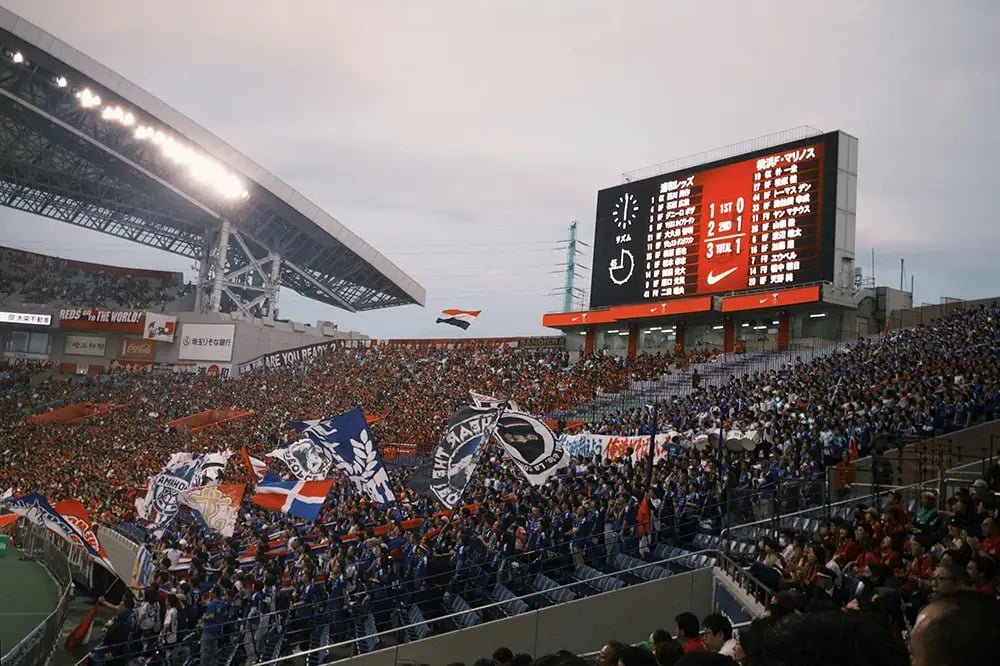
Players improve by playing the game
One particularly important element of Japan’s Way is its recognition that footballers improve through playing football. Young players need technical repetition, physical development and coaching guidance, but they also require game situations that demand scanning, communication and decision-making. The Japanese system includes extensive school, club and federation competition. Players can progress through different pathways rather than relying exclusively on one professional academy structure.
This diversity is a strength. School soccer continues to hold major cultural importance in Japan, while J.League academies and JFA programmes provide alternative development environments. University soccer has also historically offered a route into the professional game. The pathway is therefore broader than the academy-to-first-team model commonly associated with European clubs. For coaches, the key is to ensure that competition contributes to development rather than simply increasing pressure.
Players need environments in which they can experiment, make mistakes and develop tactical independence. The ISSPF article Creating Coaching Environments highlights the importance of clarity, challenge, support, psychological safety and player autonomy.
Those principles are closely connected to Japan’s most effective soccer. The senior national team looked at its best when players understood the framework but remained free to make decisions. The coaching environment gave them reference points rather than attempting to control every action.
European soccer is accelerating Japan’s development
One of the clearest changes in Japanese soccer is the growing number of national-team players based overseas.
The 26-player squad originally selected for the 2026 World Cup contained only three players from J.League clubs. Twenty-three were contracted to clubs outside Japan, with the overwhelming majority playing in European leagues. The squad included players from clubs in England, Germany, Spain, Italy, France, the Netherlands, Belgium, Scotland and Denmark.
This represents a major transformation. Previous Japanese generations included important European-based players, but overseas experience is now normal throughout the squad rather than limited to a small group of stars. Goalkeeper Zion Suzuki was playing in Italy. Defenders Takehiro Tomiyasu, Ko Itakura, Tsuyoshi Watanabe, Hiroki Ito and Yukinari Sugawara were operating across leading European environments.
The midfield and attacking positions included players such as Daichi Kamada, Ritsu Doan, Takefusa Kubo, Ao Tanaka, Ayase Ueda, Daizen Maeda and Keito Nakamura. These players experience different tactical systems every week. Some work within high-possession teams. Others are exposed to direct football, aggressive pressing, deep defensive blocks or intense transition matches. They compete against players with different physical and technical profiles and learn to interpret varied coaching methods. When they return to the national team, Japan benefit from this accumulated experience.
Moriyasu can combine players shaped by the Bundesliga, Premier League, La Liga, Ligue 1, Eredivisie and other competitions. The national game model becomes richer because the squad has experienced multiple solutions to similar tactical problems.

Living overseas develops more than football ability
Moving from Japan to Europe also creates significant personal challenges.
Players must adapt to different languages, food, social expectations and coaching cultures. They may need to understand tactical instructions before they can communicate fluently. They must establish themselves in a dressing room where their previous reputation carries limited weight. These experiences can develop independence and resilience.
A young Japanese player moving abroad may need to recover from non-selection without the immediate support of family. They may need to ask questions in a second language or recognise that feedback is expressed differently from what they experienced at home. The transition can also improve tactical communication. Players learn key football terminology, adjust to faster meetings and become comfortable receiving information from coaches with different personalities. Over time, they may develop a greater ability to adapt quickly between club and international environments.
This should not be romanticised.
Living abroad can create loneliness, anxiety and cultural isolation. Clubs and agents have a responsibility to support language development, accommodation and player welfare. But when the transition is managed well, the experience can accelerate both personal and soccer development. Japan’s 2026 squad demonstrated the value of that exposure. The players were comfortable facing elite opponents because many already competed against similar individuals every week.
The J.League remains the foundation
The increase in overseas players does not make the J.League less important. The domestic competition remains the environment in which most Japanese professionals begin their senior careers. It develops players, provides match exposure and gives European recruiters access to an increasingly respected talent pool. The relationship should therefore be understood as a pathway rather than a competition between Japan and Europe.
The J.League develops players who move abroad. Those players gain additional experience and strengthen the national team. Their success increases international interest in Japanese soccer and creates further opportunities for younger players. The challenge is ensuring that Japanese clubs receive appropriate sporting and financial value when players transfer.
The movement of talented players can weaken domestic teams if replacements are not ready or transfer fees do not reflect the player’s potential. However, it can also create sustainable development when income is reinvested in academies, coaching and recruitment. The new J.League calendar forms part of this wider international strategy.

Why the J.League is moving to an August-to-May season
The 2026–27 J.League season begins on 7 August 2026 and represents a major change in Japanese professional soccer. The league is moving from its traditional calendar-year structure towards an August-to-May season. A winter break will run from approximately the second week of December until the third week of February, with the campaign concluding around the end of May. (The official Website of J.LEAGUE)
This aligns Japan more closely with many European competitions and the continental Asian schedule. The change could improve the movement of players and coaches between Japan and Europe. Previously, European clubs often attempted to sign J.League players during the middle of the Japanese season. The selling club could lose an important player at a highly disruptive point, while the footballer arrived in Europe without a conventional preseason.
Greater calendar alignment may allow transfers to happen at more natural points for both clubs. It can also help Japanese players arrive in Europe closer to the beginning of the European campaign, giving them a better opportunity to complete preseason, understand the coach and compete for selection before league fixtures begin.
The J.League has also increased its presence in Europe as part of a strategy intended to create stronger flows of information, people and investment between the markets. (J.League) The calendar change will not solve every challenge. Japan’s climate creates significant regional differences, while the long winter break will require careful physical planning. However, it shows that Japanese soccer is willing to change domestic structures in pursuit of international development.
Why did Japan go out too early?
Japan’s exit against Brazil demonstrated both their progress and the next challenge. They defended compactly in the first half, intercepted possession in midfield and attacked decisively to take the lead. Their organisation restricted Brazil and allowed Japan to enter half-time ahead.
The match changed after the interval.
Brazil created greater width, found space between Japan’s lines and forced the wing-backs and back three to defend closer to their own goal. Japan struggled to win second balls and could no longer create enough attacking transitions to relieve the pressure.
After Brazil equalised, Japan continued working and defending with commitment. However, they lacked the energy and control needed to move the game away from their penalty area. The decisive goal arrived in stoppage time. (JFA|公益財団法人日本サッカー協会)
This is the next step in Japan’s development.
They have shown they can compete with elite nations and produce outstanding periods. The challenge is sustaining control when the opponent raises its level. Japan require the ability to defend without becoming permanently trapped. They need outlets capable of retaining possession, drawing fouls or moving the team higher. They must become stronger in second-ball situations and more adaptable when an opponent changes its attacking structure.
These are fine margins, but fine margins separate exciting teams from genuine world champions.
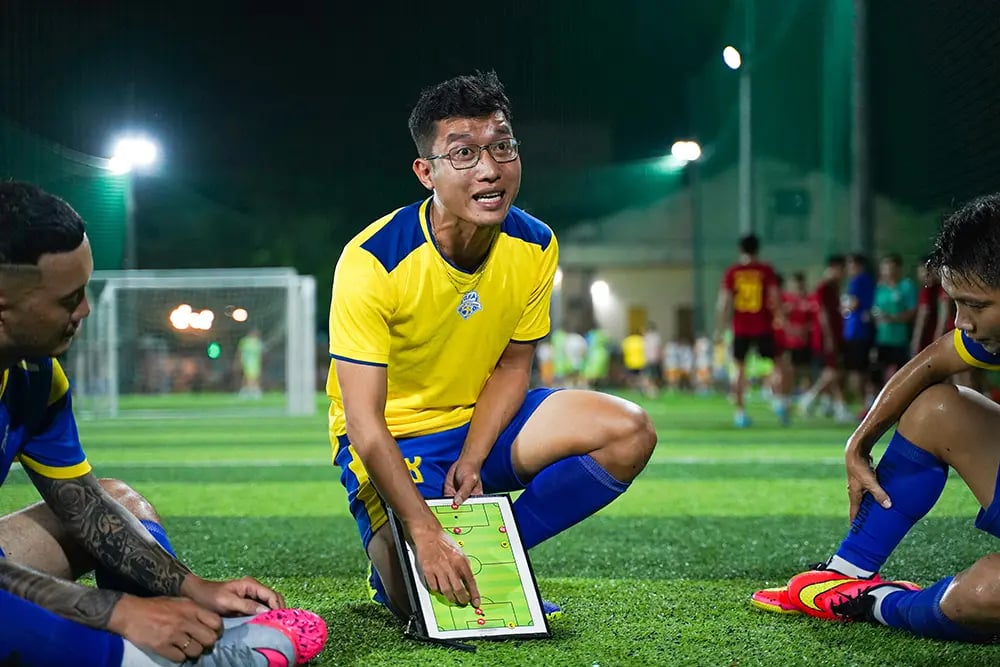
What coaches can learn from Japan
Japan’s development should not be copied through one formation or training exercise.
The most important lesson is alignment.
The JFA has connected a national philosophy with youth development, coach education, grassroots access and senior international ambitions.
Young players are exposed to national and international competition. Coaches are developed alongside the players. Academies combine soccer with education and personal responsibility. The J.League provides a professional foundation, while European soccer offers an additional development stage. The playing identity also reflects national strengths. Japan use technical speed, movement, discipline, pressing and collective work rather than attempting to imitate a different country’s identity completely.
For coaches working within clubs and academies, the ISSPF article on Developing a Game Model for Elite Youth Soccer provides practical guidance on connecting technical, tactical, physical and psychological development to a clear playing approach.
The ISSPF Certificate in Youth Soccer Athletic Development can help practitioners understand maturation, physical development, testing, training design and the long-term pathway from youth soccer towards senior performance.
Coaches seeking to establish a clearer methodology can also explore the Foundation Certificate in Soccer Coaching, Periodisation and Game Model Development. The programme examines how a playing philosophy can be translated into weekly training and match behaviours.
Japan’s World Cup ended earlier than many supporters hoped.
Yet the tournament confirmed that Japanese soccer is no longer defined by isolated moments of international surprise.
It is defined by a system.
That system has produced technically intelligent players, a high-energy national identity and a squad overwhelmingly experienced in European competition.
Japan have not yet reached their declared destination of becoming world champions. But their direction is clear, their development pathway is increasingly connected and the gap to the world’s strongest nations continues to narrow.
The next breakthrough may not require Japan to change who they are.
It may require them to become an even more complete version of the team they have already built.
Courses covered in this article
Certificate in Youth Soccer Athletic Development (LTAD)
The Certificate in Youth Athletic Development in Soccer (LTAD) provides the latest training methods, research findings and detailed insights to help coaches prepare, train and maximise the long-term development of youth soccer players.
View Details
Foundation Certificate in Soccer Coaching, Periodisation & Game Model Development
Coach with a real framework – not a collection of drills – through a professional certification in Game Model Development and Periodisation, so every session has purpose, every week has structure, and training actually transfers to match performance.
View Details
Did you enjoy this article?
Thanks for your feedback!