
Pep Guardiola’s ten-year Manchester City era is over. Enzo Maresca now inherits an elite squad, an established tactical language and one of the most recognisable game models in world soccer. Following a difficult Community Shield debut, the challenge is clear: preserve what makes Manchester City successful without becoming a copy of the coach who came before him.
Replacing a successful head coach is difficult. Replacing a coach whose ideas have shaped almost every part of a club for ten years is something different altogether. That is the challenge facing Enzo Maresca at Manchester City. Pep Guardiola stepped down this summer following a decade in which City won 20 major trophies and six Premier League titles, while his influence extended well beyond results. Possession structures, positional play, inverted full-backs, the use of central overloads, the evolution of the goalkeeper in build-up and repeated tactical reinvention became part of Manchester City’s football identity.
Maresca was appointed on 29 June 2026 and signed a three-year contract. He is not arriving as an outsider. He previously coached City’s Elite Development Squad and later worked as part of Guardiola’s staff during the 2022/23 Treble-winning campaign before continuing his managerial career with Leicester City and Chelsea. That familiarity is important—but it creates its own problem.
If Maresca changes too much, too quickly, he risks removing behaviours that have been developed over thousands of hours on the training pitch. If he changes too little, Manchester City risk becoming predictable and Maresca risks being judged as a Guardiola imitation rather than a head coach with his own ideas. His first competitive match demonstrated how unforgiving that transition can be. Arsenal defeated City 3–0 in the Community Shield on 16 August, with goals arriving in the opening minute, before half-time and shortly after the interval. It was one match, and certainly not enough evidence to define a new coaching era, but it reinforced how little time elite soccer gives a new coach to establish his identity.

The Premier League begins for City against Bournemouth at the Etihad Stadium on 23 August. For coaches watching from outside Manchester, however, the most interesting question is not whether Maresca wins his first league match.
It is much bigger:
How does a coach inherit a successful game model, retain its strongest principles and still make the team his own?
A Game Model Is Bigger Than a Formation
One of the mistakes coaches can make when analysing an elite team is reducing its identity to numbers on a tactics board.
Manchester City under Guardiola were never simply a 4-3-3, a 3-2-5 or a team that inverted a full-back. Those shapes changed. The principles underneath them were far more consistent.
City wanted to control territory and possession, create numerical or positional advantages, manipulate the opposition’s defensive structure, protect themselves against transition and position players so that regaining possession could happen quickly when attacks broke down. The personnel and structures evolved repeatedly.
Guardiola used attacking No.8s, false nines, orthodox strikers, inverted full-backs, centre-backs stepping into midfield and different combinations of wide and inside players. Premier League analysis of Guardiola’s decade highlights how City continually evolved rather than protecting one rigid tactical solution.
That is an important coaching lesson.
A game model should provide stability without becoming static.
The principles tell players what the team is trying to achieve. The structure provides one possible way of achieving it. When coaches confuse those two things, they can become prisoners of their own formation.
Maresca arrives with philosophical similarities to Guardiola. Premier League analysis of his Chelsea side identified an emphasis on patient possession, positional play and structured build-up. Between July 2024 and December 2025, Chelsea averaged 57.5% possession under Maresca compared with City’s 60.5% over the same period. Both teams were also among the Premier League sides least inclined simply to force passes forward.
But the differences are just as interesting.
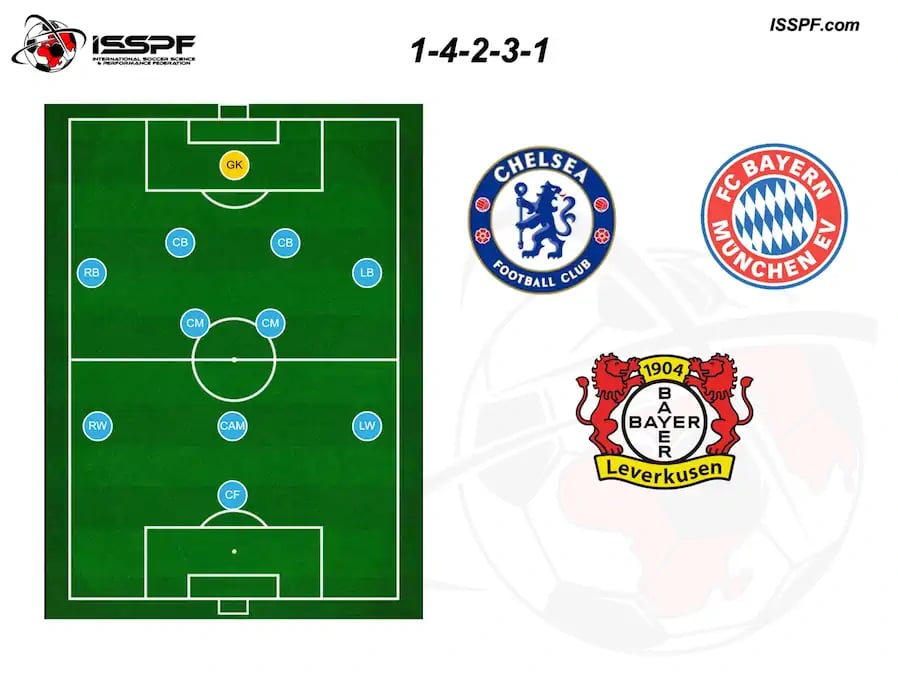
Maresca’s Chelsea pressed more aggressively according to the same analysis and frequently used more man-oriented defensive pressure. His preferred attacking organisation has often developed from a 4-2-3-1 base towards a 3-2-2-3 or 3-box-3 structure, with full-backs capable of moving into several different zones. This is where Manchester City’s evolution could become fascinating.
Maresca does not need to throw away positional play to establish independence. His identity can emerge through the details: pressing behaviour, full-back movements, player relationships, transition speed, how aggressively City defend forward and how much freedom particular players receive. This distinction matters for coaches at every level.
When inheriting an existing team, the first question should not be:
“What formation do I want to play?”
It should be:
“Which behaviours already help this team perform, which behaviours need to evolve and what do I want the players to recognise consistently regardless of formation?”
That is the foundation of game-model development.
The ISSPF Foundation Certificate in Soccer Coaching, Periodisation & Game Model Development explores exactly this relationship between playing principles, training organisation and the development of a repeatable coaching methodology.
ISSPF also examines how a playing identity must transfer from the coach’s ideas into the daily training environment in Game Model Development in Soccer and Soccer Tactics, Periodisation and Game Model Development.
The important word is transfer.
A PowerPoint presentation can describe a game model. Only training can build one.
Changing the Coach Means Changing the Training Environment
The tactical diagrams will attract most of the attention during Maresca’s opening weeks, but the deeper transition will take place at the City Football Academy. Every head coach changes training. Even when coaches share broad tactical ideas, their terminology, feedback, exercise design, intervention style, emotional behaviour and expectations are different.
Players therefore have to learn the new coach while the coach learns the players.
That process has been made more difficult by the 2026 World Cup.
When City began preseason under Maresca, several senior players were still absent following their involvement in the tournament and subsequent recovery period. Maresca worked initially with a significant number of academy players and acknowledged that some World Cup participants would return only shortly before the Community Shield.
This is an important performance problem.
A new coach would ordinarily use preseason to establish terminology, introduce tactical principles, develop physical capacity and rehearse the relationships required for competition. Maresca has instead had to begin that process with players returning at different times and carrying different physical histories.
For the performance staff, that creates two programmes operating simultaneously.
The collective programme asks:
What does the team need to learn?
The individual programme asks:
What does each player need physically?
Those answers are not always compatible.
A player returning from a long World Cup campaign may need reduced loading precisely when the coach wants repeated tactical practice. Another player who played limited tournament minutes may require more physical exposure. Academy players may have completed the full preseason but then lose their place when senior internationals return. The coach cannot solve this problem by treating every player identically.
Training must therefore become an integrated decision involving coaching, sports science, strength and conditioning, medicine and analysis.
ISSPF explores this connection through the Certificate in Soccer Training Load Management, while the Certificate in Physical Training & Soccer Methodology addresses the challenge of balancing tactical and physical preparation.
For a new head coach, however, there is another danger – The temptation is to coach everything immediately.
New managers want players to understand their build-up, pressing, defensive block, attacking movements, transitions and set plays. The result can be information overload.
Elite coaching is often about deciding what not to coach yet. Maresca must identify the behaviours that provide the biggest immediate performance return. The first might be build-up spacing. The second could be pressing references. The third might involve rest defence and the positions City occupy behind the attack. Once these behaviours become stable, another layer can be added. This is where tactical periodisation becomes more than planning a weekly timetable.
Training content should continually reinforce the game model while respecting the physical and cognitive demands of competition. A coach should be able to look at Tuesday, Wednesday and Thursday and understand not only the physical stimulus but which tactical behaviours are being developed and why.
ISSPF’s guidance on competitive soccer training microcycles reinforces the importance of connecting the demands of the game with purposeful weekly planning.
ISSPF faculty member Dr Adam Owen similarly works across the intersection of game-model development, training methodology and performance science, illustrating why modern coaching increasingly requires tactical and physical planning to operate as one process rather than separate departments.
The Community Shield defeat should therefore be viewed carefully.
A 3–0 scoreline naturally creates headlines, but one early-season result cannot tell us whether a new methodology will succeed.
What it can do is identify problems for the training week.
Conceding inside the opening minute raises questions about readiness and defensive organisation. Arsenal then added goals before half-time and shortly after the restart. City’s official match report acknowledged that Maresca’s side faced a difficult afternoon before attention immediately shifted towards Bournemouth.
For coaches, that is precisely how early competitive games should be used.
Not as a referendum on the entire philosophy—but as information.
Which spacing relationships broke down? Where was pressure applied too late? Were players clear about responsibility? Did the attacking structure leave sufficient protection when possession was lost?
The game model becomes stronger when match evidence changes training behaviour.
Maresca’s Biggest Challenge Is Evolution, Not Imitation
Manchester City’s decision to appoint Maresca represents continuity, but continuity should not mean preservation. Guardiola’s greatest lesson may actually have been his willingness to abandon his own solutions.
His City teams changed repeatedly as opponents adapted. The false nine gave way to Erling Haaland. Full-back roles evolved. Centre-backs moved into midfield. Possession became more direct when the competitive environment demanded it. Premier League analysis describes this continual reinvention as one of the defining features of Guardiola’s tactical legacy.
Maresca must now do the same thing from a different starting point. He inherits players educated in positional soccer, but he also inherits opponents who have spent a decade studying how to disrupt Manchester City. The solution cannot simply be Guardiola’s 2022 ideas reproduced in 2026.
Premier League analysis already suggests areas where Maresca may take City in a different direction: more man-oriented pressing, a 4-2-3-1 base that can develop into a 3-2-2-3 in possession, central overloads designed to create isolation for wide attackers and full-backs moving dynamically through midfield zones. Those details will evolve as Maresca learns what his current squad can deliver.
And that is another fundamental coaching principle:
The game model must influence recruitment, but the available players must also influence the game model.
A coach may have a preferred idea, but elite methodology cannot ignore player characteristics. Erling Haaland changes how opponents defend depth. Jeremy Doku and Antoine Semenyo offer individual qualities in wide areas. Phil Foden and Rayan Cherki can interpret central attacking spaces differently. The coach’s task is to construct relationships around those abilities rather than forcing every player into a theoretical template.
This is why analysis, recruitment and coaching should speak the same language. A club that knows its game model can define the profiles it requires. A coach who understands those profiles can build training around the actions players will actually perform.
The ISSPF Foundation Certificate in Soccer Performance Analysis provides another relevant learning pathway for practitioners interested in translating match information into game-model development and practical coaching interventions.

There is also a psychological and cultural component.
Players who spent years being coached by Guardiola will inevitably compare methods. That does not mean they are resistant to change. It means the new coach must build credibility.
Clarity helps | Consistency helps | Winning helps most of all.
But leadership becomes particularly important when results are imperfect.
The ISSPF Soccer Insights Podcast discussion with Steve McClaren explores coaching, leadership, culture and elite standards—areas that become particularly relevant when a coach inherits an established high-performance environment and has to create authority without unnecessarily destroying what already works.
Manchester City’s next era will not be judged after one Community Shield or one Premier League weekend. Replacing ten years of Guardiola requires patience, but elite soccer rarely offers much of it. That is why Maresca’s task is such a fascinating coaching case study. He inherits extraordinary advantages: talented players, elite facilities, an established technical culture and a squad already familiar with sophisticated tactical concepts.
He also inherits enormous expectations and a style of play closely associated with someone else.
His challenge is to separate the principles worth protecting from the solutions that now need changing.
That distinction should interest every coach.
Whether taking over Manchester City, a professional academy or an amateur team, arriving in a new environment does not mean everything that existed before was wrong.
- Good coaching begins by observing.
- What does the team already understand?
- Which behaviours are embedded?
- Which relationships are valuable?
- Where is performance breaking down?
Then comes the most important question:
What must change for this group to become my team without losing the strengths it already possesses?
That is game-model development in its most practical form. Manchester City after Guardiola will provide one of the clearest elite examples of that process during the 2026/27 season. The formations will change. Players will move into different spaces. Matches will produce tactical successes and failures. Maresca will inevitably adapt. The real measure of his work will be whether Manchester City remain recognisable without remaining identical.
For coaches looking to develop a clearer playing philosophy and understand how tactical ideas can be transferred into the training environment, explore the ISSPF Foundation Certificate in Soccer Coaching, Periodisation & Game Model Development and the wider range of ISSPF online soccer coaching, science and performance courses.
As the Manchester City story demonstrates, modern coaching is no longer simply about choosing a formation. It is about building a methodology capable of surviving change.
Manchester City after Guardiola, Man City tactics 2026/27, Manchester City game model, Pep Guardiola successor, soccer coaching methodology, tactical periodisation, Premier League coaching
Courses covered in this article
Foundation Certificate in Soccer Coaching, Periodisation & Game Model Development
Coach with a real framework – not a collection of drills – through a professional certification in Game Model Development and Periodisation, so every session has purpose, every week has structure, and training actually transfers to match performance.
View Details
Certificate in Soccer Training Load Management
The ISSPF online Soccer Load Management course exposes you to the specific methods and processes used by elite level coaches to plan and monitor the training load of players and teams.
View Details
Certificate in Physical Training & Soccer Methodology
How do you achieve and manage the balance between physical and tactical training? This course answers that question and takes you through soccer-specific physical training and soccer methodology, as well as how to enhance the performance of your players.
View Details
Did you enjoy this article?
Thanks for your feedback!