
Soccer Pre-Season Training After the 2026 World Cup: The 33-Day Turnaround
For decades, soccer pre-season training has represented a relatively recognisable period in the annual coaching calendar. Players return from a summer break, physical qualities are progressively restored, strength and conditioning work develops, tactical principles are reintroduced and friendly matches gradually expose the squad to the intensity required for competitive football. The 2026 calendar is challenging that traditional model. Spain’s World Cup final victory over Argentina took place on 19 July, while the 2026/27 Premier League season begins on 21 August, creating just 33 days between the end of football’s biggest international tournament and the start of one of the world’s most demanding domestic competitions.
Even that 33-day figure can be misleading from a performance perspective because it is not the same as having 33 days of uninterrupted preparation. Players who progressed into the latter stages of the World Cup require genuine physical and psychological recovery before another demanding training period begins. The Premier League itself acknowledged this issue when outlining pre-season plans, noting that players progressing to the quarter-finals, semi-finals and final were expected to receive rest and could therefore return to their clubs only in early August.
This creates a coaching challenge that reaches far beyond one competition. Elite squads can now reconvene with players occupying completely different physical starting positions. One player may have accumulated seven high-pressure international matches and additional extra-time exposure, another may have spent the same period travelling and training while receiving limited competitive minutes, while a teammate who did not attend the tournament may already have completed four or five weeks of structured club preparation. Injured players, late transfers and young players transitioning into first-team environments add further complexity.
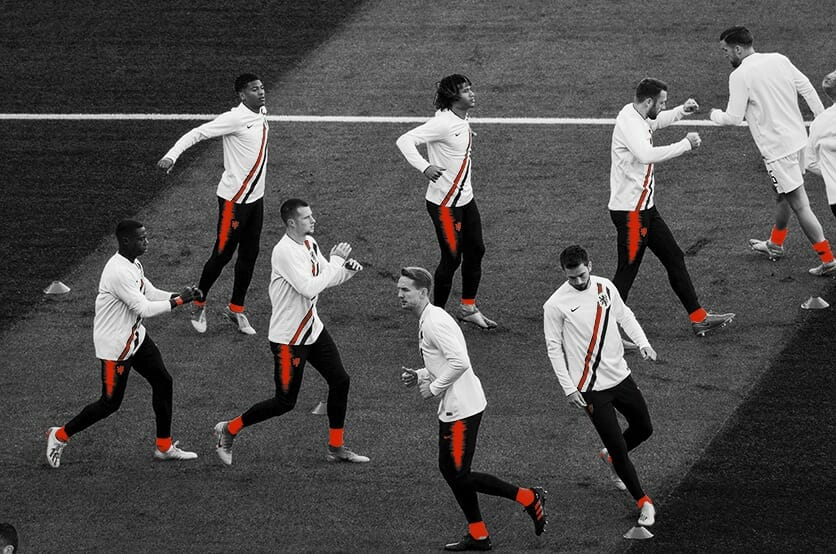
The important question for coaches is therefore becoming less about how long pre-season should last and more about what each individual player needs before being genuinely prepared to perform. Modern soccer pre-season training is increasingly becoming a process of recovery, reconditioning, physical exposure and tactical reintegration carried out at different speeds within the same squad.
Why Modern Soccer Pre-Season Training Cannot Begin at the Same Point for Every Player
The traditional concept of pre-season assumes that the majority of a squad begins from a broadly similar position. Players have experienced an off-season, their training volume has reduced, some degree of detraining may have occurred and the coaching staff can progressively rebuild the team towards the opening competitive fixture. That assumption becomes difficult to maintain when international competitions overlap so closely with the beginning of a new club season.
Research into the international match calendar has increasingly highlighted the importance of in-season recovery, off-season breaks, international travel and cumulative workload when considering the long-term health and performance of professional players. Den Hollander et al. (2025), in an expert position statement examining the men’s international match calendar, identified rest, recovery, travel and workload as important considerations within an increasingly congested football environment. The message for coaches is not that every heavily used player must follow the same period of complete rest, but that recovery opportunities should form part of performance planning rather than being considered time lost from training.
This becomes particularly important because tournament participation does not create a uniform training effect. Two players can spend exactly the same number of weeks with their national team while returning to their clubs with very different needs. A regular starter may have accumulated repeated 90-minute performances, high-speed running, accelerations, decelerations, duels and significant mental stress. An unused or lightly used substitute may have experienced the same travel and psychological environment but without equivalent competitive exposure. Research examining starters and substitutes has demonstrated meaningful differences in training load, match exposure, fatigue and recovery profiles, reinforcing why playing status should influence subsequent physical preparation.
The consequence is that post-tournament planning cannot simply involve giving every international player a fixed number of days away and then placing everyone into the same team programme. One player may need unloading and recovery, while another could actually require additional physical work because his competitive exposure has been lower than normal. Coaches must recognise that a player can be fatigued through excessive exposure, but a player can also be fresh while remaining underprepared for the intensity of competition.
This distinction is central to effective soccer training load management. The objective is not to make training consistently harder or easier, but to provide an appropriate stimulus based on recent loading, current recovery and the demands approaching next. ISSPF’s Certificate in Soccer Training Load Management specifically addresses how coaches and practitioners can plan and monitor workload while balancing fitness, freshness and performance. (ISSPF)
Fixture congestion provides further context. A systematic review by Page et al. (2023) found that five of the eight studies included identified increased match injury incidence during congested periods, although the findings across the literature were not completely uniform. This is an important distinction because load should never be presented as a simple predictor of injury. Injury is multifactorial, and GPS distance or the number of matches completed should not be used in isolation to determine whether an individual player is likely to break down.
The practical lesson is instead that compressed schedules reduce the margin for poor planning. Recovery, physical loading, strength work and football-specific exposure must be coordinated more carefully because coaches have less time to correct inappropriate decisions. ISSPF has previously explored this relationship in its analysis of fixture congestion in elite soccer, providing additional context around how demanding schedules interact with player preparation and availability. (ISSPF)
The same logic applies far beyond professional football. Amateur, academy and semi-professional coaches regularly manage players arriving at pre-season with different preparation histories. Some have trained consistently during the break, some have done little structured work, some return from injury and others join after missing the opening weeks. The resources may be different, but the principle remains the same: pre-season should begin with an understanding of what the player has already experienced rather than an assumption that everyone starts from zero.
From Recovery to Reconditioning: Avoiding Both Overload and Under-Preparation
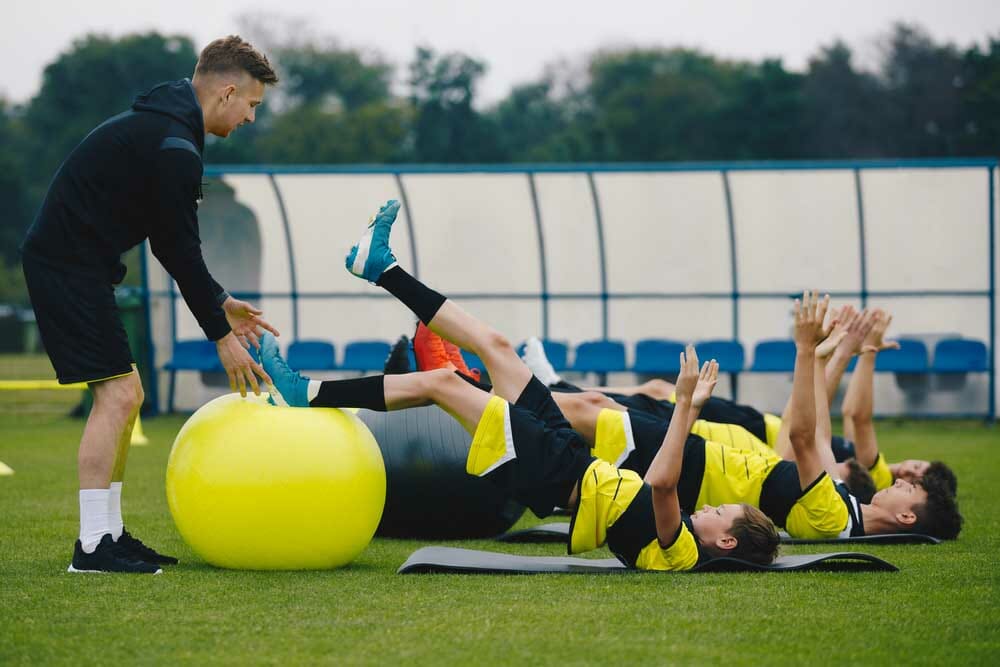
One of the most difficult decisions in modern physical preparation is identifying when recovery should give way to reconditioning. Players returning from a major international tournament need time to recover from accumulated physical and psychological demands, but recovery cannot become indefinite avoidance of the intensities that competitive soccer will soon require. The challenge for the performance team is to progressively restore the player’s capacity to tolerate football rather than simply ensuring the player feels rested.
Post-match fatigue is multifactorial. Research into recovery in soccer has identified factors including glycogen depletion, dehydration, muscle damage and mental fatigue, while sleep plays an important role in the wider recovery process. Nédélec and colleagues have highlighted how competition schedules, travel, late matches and post-match arousal can disrupt sleep, potentially compromising recovery when players are repeatedly exposed to demanding schedules.
A short post-tournament break can therefore be valuable, but the next stage must reflect what the player will actually encounter when competitive football returns. Total distance alone is not enough. Soccer contains repeated accelerations, decelerations, changes of direction, high-speed running, sprinting, technical actions under pressure and position-specific tactical movements. The reconditioning programme should gradually restore those demands rather than relying exclusively on generic aerobic work or low-intensity possession practices.
High-speed running deserves particular attention. Gualtieri et al. (2023), in a systematic review of professional adult soccer, concluded that appropriate high-speed and sprint exposure requires deliberate training design and highlighted the value of combining game-based practices, running exercises and soccer-specific circuits. Their review also demonstrated the considerable high-speed and sprint demands present within professional match play, reinforcing why these actions cannot simply be ignored during preparation. (PubMed)
This creates an important coaching paradox. When a player returns fatigued from a tournament, removing demanding running can be entirely appropriate during the initial recovery period. However, continuing to protect that player from high-speed running until the first competitive match can leave him inadequately prepared for the exact movements he will be expected to reproduce under pressure. The goal is therefore not maximum exposure but progressive and appropriate exposure.
ISSPF’s article on high-speed running training in elite professional soccer provides further practical discussion around the role of high-speed running within physical preparation. The wider ISSPF pre-season training resources also reinforce that player development during preparation should incorporate the physical, technical and coaching context rather than treating conditioning as an isolated activity. (ISSPF)
Strength training presents a similar challenge. A shortened preparation period does not necessarily justify eliminating strength work because there is no longer time to complete a traditional pre-season strength block. Practitioners may instead need to identify which physical qualities have been maintained, which have declined and what effective training dose can coexist with increasing football exposure. In this context, the ability to prioritise becomes more important than attempting to reproduce a six-week programme inside ten days.
The player’s position and the team’s game model should also shape this process. A full-back expected to repeatedly overlap and recover into large spaces requires a different physical profile from a centre-back defending predominantly inside a compact block. A midfielder in an aggressive pressing system may accumulate repeated accelerations, decelerations and transition actions, while a winger may require frequent exposure to near-maximal speed. Effective soccer conditioning should therefore connect physical preparation with the actions the coach expects the player to perform during matches.
The same integration applies tactically. International players return from a different coaching environment, playing structure and tactical vocabulary. Pressing triggers, build-up positions, rest-defence responsibilities, set plays and positional relationships may all need to be re-established. A player can be physically fresh but tactically disconnected, while unnecessary running caused by poor positioning can itself increase the physical cost of returning to the team. The ISSPF guide to soccer periodisation offers further insight into how training and recovery can be organised around the competitive calendar rather than delivered through an inflexible template. (ISSPF)
This is why returning to team training should not automatically be interpreted as returning to full competitive performance. Completing one session shows that a player tolerated that particular exposure; it does not prove that the player is prepared to reproduce repeated high-intensity actions for 90 minutes and then recover sufficiently to train and compete again several days later. Coaches should evaluate readiness as a developing profile involving recent workload, physical exposure, tactical sharpness, recovery, medical information and player feedback.
Individual Periodisation May Be the New Pre-Season
The changing calendar does not mean traditional pre-season has disappeared completely. Many players still receive a meaningful off-season and complete several weeks of structured preparation before competitive football begins. What is disappearing at the highest levels is the assumption that an entire squad can always move through exactly the same preparation programme at exactly the same speed.
A modern performance department may simultaneously manage established players who have completed the full pre-season, internationals requiring post-tournament recovery, lightly used international substitutes needing additional loading, rehabilitation players, new signings and academy players being exposed to first-team demands. The coaching challenge becomes one of individual periodisation inside a collective team environment.
This requires collaboration rather than simply more technology. GPS systems can describe external load, wellness questionnaires can provide context around perceived fatigue and sleep, medical staff can assess health status and coaches can evaluate tactical sharpness. None of these sources independently determines the perfect programme. Better decisions emerge when information is interpreted collectively and placed within the context of what the player has done and what the player will be asked to do next.
ISSPF faculty member Antonis Tsikakis works across strength and conditioning, load management, rehabilitation and return-to-play, areas that become particularly relevant when individual players are following different routes towards competitive readiness. The wider high-performance principle of integrating people and information is also explored in the ISSPF Soccer Insights Podcast with Darcy Norman, Director of Performance at Chicago Fire FC, where the discussion focuses on building effective high-performance systems within elite football environments. (ISSPF)
Selection decisions are another important part of the process. The opening league fixture naturally creates pressure because coaches want their strongest team available and players want to compete. Yet the first match should not automatically become the deadline controlling every training decision. For one player, starting immediately may be appropriate; for another, a substitute appearance may provide the next useful competitive exposure, while someone else may benefit more from an additional week of structured training.
This means that the opening weeks of a domestic season may increasingly function as an extension of the preparation process for some players. Competitive games should never be treated casually as conditioning sessions, but coaches can manage the work surrounding them through selection, substitute minutes, recovery days, compensatory training, individual top-ups and appropriately timed strength and sprint exposure. The objective is to continue building readiness without losing the freshness required to perform.

Successful pre-season training should therefore not be judged simply by the amount of work completed. High training volume does not automatically demonstrate good preparation, just as reducing every demanding exposure does not automatically demonstrate good player welfare. Effective preparation should leave the player capable of tolerating the physical, technical and tactical demands that competition will impose while retaining enough freshness to express those qualities effectively.
This principle has significance throughout the football pyramid. A grassroots coach may not have GPS technology, sports scientists or medical departments, but the same decision-making process can still be applied through conversation, attendance history, observation and appropriate training design. If one player has completed five weeks of preparation and another has attended two sessions, they should not automatically be treated as having the same readiness simply because they are standing on the same training pitch.
The 33-day turnaround following the 2026 World Cup therefore represents something larger than a scheduling curiosity. It is a visible example of how the modern football calendar is forcing coaches to reconsider the boundaries between off-season recovery, soccer pre-season training and the early competitive period. The Premier League’s decision to begin its season 33 days after the World Cup final provides one particularly clear illustration, but the coaching problem is global wherever club and international calendars intersect.
Elite soccer may not have lost pre-season, but it is increasingly losing the traditional idea of pre-season as one uninterrupted block completed by an entire squad together. What is replacing it is a more fluid process in which recovery, reconditioning, high-speed exposure, strength development, tactical reintegration and competitive minutes are managed according to individual preparation histories.
For coaches and performance practitioners, that makes the quality of the decision more important than the simplicity of the programme. The best preparation is neither automatically more training nor automatically more rest; it is the appropriate combination of both, delivered at the right moment for the player in front of you. Understanding what the player has completed, what physical qualities may be missing and what the next competitive demands will require is increasingly becoming the foundation of effective modern soccer pre-season training.
TAKE THE COURSE NOW: Develop a deeper evidence-informed understanding of player workload, recovery, monitoring and physical preparation with the ISSPF Certificate in Soccer Training Load Management. The course is designed to help soccer coaches and performance practitioners understand the specific methods used to plan and monitor training load while balancing fitness, freshness and performance across demanding competitive schedules. (ISSPF)
TAKE THE ISSPF CERTIFICATE IN SOCCER TRAINING LOAD MANAGEMENT NOW
References (5)
Abbott, W., Thomas, C. and Clifford, T. (2023) ‘Effect of playing status and fixture congestion on training load, mental fatigue, and recovery status in Premier League academy goalkeepers’, Journal of Strength and Conditioning Research, 37(2), pp. 375–382.
Den Hollander, S., Burgess, D., Kerkhoffs, G. and Gouttebarge, V. (2025) ‘The International Match Calendar in Men’s Professional Football: An Expert Position Statement’, Scandinavian Journal of Medicine & Science in Sports, 35(11), e70163.
Gualtieri, A., Rampinini, E., Dello Iacono, A. and Beato, M. (2023) ‘High-speed running and sprinting in professional adult soccer: Current thresholds definition, match demands and training strategies. A systematic review’, Frontiers in Sports and Active Living, 5, 1116293.
Nédélec, M., Halson, S., Abaidia, A-E., Ahmaidi, S. and Dupont, G. (2015) ‘Stress, sleep and recovery in elite soccer: A critical review of the literature’, Sports Medicine, 45(10), pp. 1387–1400.
Page, R.M., Field, A., Langley, B., Harper, L.D. and Julian, R. (2023) ‘The effects of fixture congestion on injury in professional male soccer: A systematic review’, Sports Medicine, 53(3), pp. 667–685.
The course covered in this article
Did you enjoy this article?
Thanks for your feedback!