Format, Performance Science, and Squad Management
Joshua M. Smith, MSc.
The landscape of women’s professional soccer has entered a transformative, highly demanding era characterized by unprecedented athletic intensity, expanding global audiences, and rapidly evolving tactical complexity. At the absolute pinnacle of this evolution stands the 2026/27 UEFA Women’s Champions League (UWCL), representing the 26th edition of Europe’s premier club competition and the 18th since its official rebranding. As 74 clubs from 50 national associations prepare for battle across the continent, the tournament presents a fascinating dual reality: while the on-pitch spectacle promises record-breaking crowds and technical excellence, the behind-the-scenes reality is governed by the rigorous principles of modern sports science, load management, and injury mitigation.
The 2026/27 campaign serves as the second season under UEFA’s modernized competition structure, featuring an expanded 18-team single-league phase. This structural evolution has effectively eliminated passive, low-intensity fixture blocks, replacing them with a continuous, high-stakes schedule where every single match directly impacts qualification for the knockout rounds. For elite clubs balancing domestic league commitments with European travel, the primary operational challenge lies in managing player readiness during high-density microcycles.
To navigate this demanding landscape, technical staff, physical performance coaches, and medical departments must operate as a fully integrated unit. The physical strain placed on modern female footballers—ranging from high-velocity sprint distances and rapid change-of-direction demands to transcontinental travel and fluctuating micro-climates—requires evidence-based periodization strategies. Bridging the gap between theoretical sports science and daily on-pitch application is no longer optional; it is the fundamental baseline required to achieve sustainable success and protect athletes’ welfare throughout a 10-month European campaign.

The Competition Roadmap and Tournament Schedule
The pathway to European glory begins in the height of the summer heat, presenting an immediate physical challenge for participating clubs. Unlike traditional pre-season windows where training loads are gradually built over six to eight weeks, clubs entering the qualifying rounds must reach peak competitive readiness in mid-July.
The tournament timeline unfolds across distinct, highly competitive phases (see Table 1):
- First Qualifying Round (Mini-Tournaments): The opening competitive fixtures launch with four-team mini-tournaments in late July. Semi-finals take place on July 22, 2026, followed immediately by the final and third-place play-offs on July 25, 2026. Playing two high-intensity matches within a 72-hour window during the peak of summer demands flawless thermoregulation and rapid glycogen replenishment protocols.
- Second Qualifying Round (Mini-Tournaments): Teams advancing from the first round, alongside entering champions and league-path contenders, compete in the second mini-tournament phase. Semi-finals are scheduled for August 5, 2026, with finals following on August 8, 2026.
- Third Qualifying Round: The final hurdle before the main competition shifts to a traditional two-legged, home-and-away knockout format. First-leg ties occur on August 26, 2026, with second-leg deciders taking place on September 2, 2026.
- The 18-Team League Phase: The main stage kicks off on September 22–23, 2026. Under this single-table system, each of the 18 qualified clubs faces six different opponents (three at home, three away) drawn from three seeding pots. Fixtures run through December 16, 2026. The top four teams automatically qualify for the quarter-finals, while teams finishing 5th through 12th enter two-legged knockout play-offs in February 2027 to secure the remaining last-eight spots.
- The Knockout Phase & Final: Following the February play-offs, two-legged quarter-finals take place in late March, followed by semi-finals in early May. The season culminates in late May 2027 at the iconic Stadion Narodowy in Warsaw, Poland, where the champions of Europe will be officially crowned.
Table 1: Tournament Schedule
| Tournament Phase | Key Dates | Match Format |
| First Qualifying Round | July 22 & 25, 2026 | Mini-Tournaments (4 Teams) |
| Second Qualifying Round | August 5 & 8, 2026 | Mini-Tournaments |
| Third Qualifying Round | August 26 & September 2, 2026 | Two-Legged Knockout Ties |
| 18-Team League Phase | Sept 22 – Dec 16, 2026 | 6 Games vs 6 Different Teams |
| Knockout Play-Offs | February 3–4 & 10–11, 2027 | Two-Legged Home & Away |
| Quarter-Finals & Semi-Finals | March 23 – May 9, 2027 | Two-Legged Knockout Rounds |
| UWCL Final (Warsaw, Poland) | Late May 2027 | Single Neutral Venue Match |
The Physiological Demands of Mid-Summer Competition
The scheduling of the first and second qualifying rounds in late July and early August introduces severe physiological stress. For clubs entering these rounds, traditional pre-season timelines are compressed. Players transitioning from offseason rest into high-intensity competitive fixtures without an adequate chronic workload base face an elevated risk of acute muscle injuries, particularly hamstrings, adductors, and calves.
Furthermore, environmental conditions during European mid-summer qualifiers frequently involve high ambient temperatures and elevated relative humidity. During intense exercise in hot environments, the body struggles to dissipate heat, leading to an elevated core body temperature and significant cardiovascular drift. To maintain cardiac output as stroke volume decreases due to fluid loss through sweat, heart rate spikes rapidly. This physiological strain impairs central nervous system function, leading to premature muscular fatigue, reduced high-speed running capacity, and diminished cognitive decision-making during the final 20 minutes of matchplay.
To mitigate these environmental risks, sports science departments implement structured thermoregulation strategies: 1. Pre-Cooling Protocols: Utilizing ice vests, cold-water immersion, and slushie ingestion 30 to 45 minutes prior to kickoff to artificially lower baseline core body temperature. 2. Per-Cooling Interventions: Strategically deploying cold, damp towels and electrolyte-rich cold fluids during mandatory cooling breaks to suppress rapid core heat accumulation. And, 3.Targeted Hydration Strategies: Conducting daily baseline hydration testing via urine specific gravity (USG) to ensure individual fluid deficit goals are established well before pitch arrival.
External and Internal Load Monitoring in Women’s Soccer
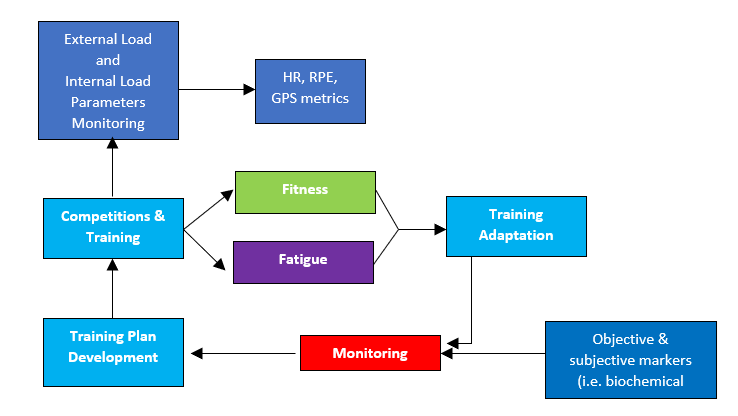
As the competition transitions into the 18-team league phase in September, the fixture density shifts dramatically. Elite clubs routinely play three competitive matches within an eight-day window when combining domestic league fixtures with mid-week UWCL travel. Managing this load requires a sophisticated blend of external and internal monitoring tools.
External load refers to the physical work performed by the athlete, measured using micro-technology (GPS and accelerometers). Key tracking metrics include: Total Distance (m): The overall volume of work completed. High-Speed Running (HSR) Distance: Typically defined in elite women’s soccer as speed threshold bands exceeding 16.0–19.0 km/h. Sprint Distance: Distance covered at velocities exceeding 19.0–22.5 km/h. And, Accelerations and Decelerations: High-intensity metabolic events (>2.5 m/s²) that impose substantial mechanical stress on the neuromuscular system, particularly eccentric strain on the quadriceps and hamstrings.
However, tracking external volume alone is insufficient. Two players can complete the exact same HSR distance while experiencing vastly different levels of physiological strain. Internal load captures the biological stress experienced by the athlete in response to that external work. Performance practitioners monitor internal load through heart rate metrics (time spent in >90% HR Max zones), Rating of Perceived Exertion (RPE multiplied by session duration in minutes to calculate Session-RPE; see Table 3), and daily subjective wellness questionnaires tracking sleep quality, muscle soreness, stress, and mood state.
Table 3: Training load calculation using RPE
| Duration (Minutes) | RPE (1-10) | Training load (Arbitrary units) |
| 90 | 5 | 450 |
| 90 | 7 | 630 |
| 90 | 6 | 540 |
By constantly cross-referencing external GPS data with internal physiological responses, strength and conditioning coaches can identify acute-to-chronic workload spikes. Maintaining a balanced workload ratio helps ensure players build physical capacity without crossing into zones associated with overreaching or acute soft-tissue injury.
Non-Contact Injury Reduction: Mitigating ACL Risks
No topic in women’s sports science commands greater attention than the reduction of non-contact lower-limb injuries, specifically Anterior Cruciate Ligament (ACL) tears. Epidemiological data indicates that female soccer players suffer non-contact ACL injuries at a rate three to six times higher than their male counterparts. The causes are multi-factorial, stemming from anatomical, biomechanical, hormonal, and environmental influences, alongside historical disparities in strength and conditioning infrastructure during youth development.
Elite clubs competing in the UWCL prioritize comprehensive, multi-layered ACL risk-reduction programs integrated directly into daily training microcycles:
- Neuromuscular Control and Deceleration Mechanics: Non-contact ACL injuries frequently occur during multi-directional plant-and-cut maneuvers or single-leg landings following an aerial duel. When a player lands with an extended knee, trunk lateral tilt, and dynamic valgus (inward collapse of the knee joint), the mechanical load placed upon the ACL increases exponentially. Daily neuromuscular warm-up programs, incorporating multi-directional plyometrics, single-leg stabilization, and proper hip-hinge landing mechanics, train the central nervous system to absorb kinetic forces safely.
- Eccentric Posterior Chain Strength: Building robust hamstring strength is vital, as the hamstrings act as functional agonists to the ACL, pulling the tibia posteriorly relative to the femur to prevent anterior translation. Incorporating progressive eccentric hamstring exercises, such as Nordic Hamstring Curls and Romanian deadlifts, enhances muscle architecture and fascicle length, dramatically increasing muscle force output during high-speed deceleration.
- Quadriceps-to-Hamstring (Q:H) Ratio: Balancing the strength ratio between the quadriceps and posterior chain ensures that high-velocity knee extension is adequately counteracted by posterior stabilization.
- Footwear and Pitch Interface: Monitoring stud configurations relative to surface hardness (hybrid grass, natural turf, or artificial turf) to prevent excessive rotational traction that can lock the foot into the turf during sudden changes of direction.
Table 2: Mitigating ACL Risks
| Risk Factor | Biomechanical Mechanism | Targeted Scientific Intervention |
| Dynamic Knee Valgus | Inward knee collapse upon impact | Single-leg plyometrics & hip strength |
| Poor Deceleration Mechanics | High anterior tibial shear force | Eccentric hamstring conditioning |
| Ground Surface Traction | Excessive foot fixation on turf | Optimized stud/soleplate selection |
| Central Nervous System Fatigue | Delayed motor unit recruitment | Objective load & HRV monitoring |
Menstrual Cycle Tracking and Individualized Performance
Modern sports science departments in elite women’s football increasingly utilize menstrual cycle tracking to optimize performance and recovery. Fluctuating levels of estrogen and progesterone throughout the follicular, ovulatory, and luteal phases influence physiological variables including energy metabolism, core temperature, ligamentous laxity, and systemic inflammation.
During the late follicular phase leading up to ovulation, elevated estrogen levels can increase joint laxity and alter tendon stiffness. In the luteal phase, elevated progesterone increases baseline core body temperature and resting heart rate, while shifting fuel substrate utilization toward protein and fat oxidation, making high-intensity carbohydrate breakdown slightly less efficient.
Rather than altering tactical game models based on cycle phases, elite clubs focus on individualizing recovery and nutritional interventions. During high-soreness or elevated-temperature phases, performance staff adjust cold-water immersion durations, customize post-match carbohydrate and protein intake, and provide targeted supplementation (such as magnesium, omega-3 fatty acids, and anti-inflammatory nutrients) to support tissue repair.
Conclusion
The 2026/27 UEFA Women’s Champions League represents a monumental milestone in the growth of women’s football. The introduction of the expanded 18-team single-league phase ensures a thrilling, highly competitive tournament from the opening qualifiers in July through to the grand finale in Warsaw in late May 2027. However, as the physical speed and tactical demands of the game reach unprecedented heights, the margin for error off the pitch has completely closed.
Success in modern European football requires far more than tactical ingenuity on matchday. It demands a sophisticated, scientific infrastructure capable of managing physiological load, navigating severe micro-climates, optimizing nutritional recovery, and systematically reducing the risk of severe soft-tissue and ligamentous injuries. The clubs that successfully balance high-performance training with biological protection will inevitably be the ones standing strong when the European crown is contested in Warsaw.
For coaches, physical performance specialists, and medical practitioners looking to lead in this modern era, continuous professional development is essential. Educational platforms such as the International Soccer Science & Performance Federation (ISSPF) provide accredited, research-backed courses in load management, strength and conditioning, sports nutrition, and team psychology. By mastering these scientific principles, performance professionals can ensure that the next generation of female athletes reaches the pinnacle of athletic performance safely, sustainably, and triumphantly.

The ISSPF Professional Certificate in Women’s Soccer Science & Coaching is a specialized, online program developed for professionals who want to advance their expertise in high-performance environments within women’s soccer. This course blends the latest in sport science, performance coaching, and applied methodologies, tailored specifically for the unique demands and opportunities in the women’s game.
This course is designed for individuals working in or aspiring to enter high performance roles within women’s soccer, including:
- Coaches & High Performance Staff: Those currently working with elite or developmental women’s teams who seek to integrate science-led coaching principles into their practice.
- Sports Scientists & Conditioning Coaches: Practitioners focused on athlete preparation, recovery, and physical performance in the context of the women’s game.
- Technical & Performance Leaders: Club and federation staff aiming to implement evidence-based systems for athlete development and team performance.
- Medical & Support Staff: Professionals working in female-specific sports medicine, rehabilitation, and athlete monitoring who want to align their work with high-performance frameworks.
- ISSPF Students & Alumni: Graduates of ISSPF foundation or specialist courses seeking to deepen their applied knowledge in women’s soccer contexts.
Course Overview & Frequently Asked Questions (FAQs)
The ISSPF Professional Certificate in Women’s Soccer Science & Coaching is a specialized, online program developed for professionals who want to advance their expertise in high-performance environments within women’s soccer. This course blends the latest in sport science, performance coaching, and applied methodologies, tailored specifically for the unique demands and opportunities in the women’s game.
Who is this course for?
This course is designed for individuals working in—or aspiring to enter—high-performance roles within women’s soccer, including:
- Coaches & High Performance Staff: Those currently working with elite or developmental women’s teams who seek to integrate science-led coaching principles into their practice.
- Sports Scientists & Conditioning Coaches: Practitioners focused on athlete preparation, recovery, and physical performance in the context of the women’s game.
- Technical & Performance Leaders: Club and federation staff aiming to implement evidence-based systems for athlete development and team performance.
- Medical & Support Staff: Professionals working in female-specific sports medicine, rehabilitation, and athlete monitoring who want to align their work with high-performance frameworks.
- ISSPF Students & Alumni: Graduates of ISSPF foundation or specialist courses seeking to deepen their applied knowledge in women’s soccer contexts.
Is this course suitable for me?
This course is particularly beneficial for those who:
- Have a background in coaching, sport science, performance analysis, or athlete development.
- Work (or aim to work) in women’s professional, semi-professional, or elite development settings.
- Hold coaching licenses or qualifications (e.g., UEFA, CONCACAF, CAF, AFC, CONMEBOL).
- Want to better understand how sport science and data can enhance decision-making and team performance in the women’s game.
- Aspire to shape high-performance cultures and contribute to the long-term development of female athletes.
Why is this course important?
Women’s soccer is evolving rapidly, with growing investment and increasing demands on athletes and staff. This course provides:
- Applied Knowledge: Tools and frameworks that reflect the physiological, tactical, and developmental characteristics of the women’s game.
- Strategic Understanding: Insight into high-performance planning, load management, and integrated coaching strategies.
- Female-Specific Focus: Scientific and performance principles tailored to the unique needs of female players.
- Expert-Led Content: Instruction from professionals with experience at the highest levels of women’s soccer, coaching, and performance science.
What skills will I develop through this course?
By completing the ISSPF Professional Certificate, you will:
- Understand how to structure and deliver performance programs for elite female athletes.
- Apply sport science principles to optimize training load, recovery, and performance.
- Analyze team and player performance using data, video, and tactical frameworks.
- Collaborate effectively within interdisciplinary teams, aligning coaching, medical, and performance goals.
- Address the physiological and psychological demands unique to female athletes, including considerations across the career span.
How will this course benefit my career?
- Enhanced Capability: Develop high-performance coaching skills that are immediately applicable in women’s soccer settings.
- Career Development: Position yourself for advanced roles in coaching, sport science, or performance leadership.
- Professional Recognition: Earn a certificate that demonstrates specialized knowledge and ISSPF standards.
- Global Community: Connect with a network of professionals driving the growth of women’s soccer worldwide.
What makes this course unique?
- Focused on Women’s Soccer: Built specifically for the technical, physical, and developmental needs of female athletes.
- Evidence-Based Approach: Rooted in the latest research and best practices from elite environments.
- Expert Instruction: Learn from leading figures in women’s soccer, coaching science, and applied performance.
- Career-Oriented Curriculum: Offers practical strategies for immediate application and long-term professional growth.
Take the Next Step
The ISSPF Professional Certificate in Women’s Soccer Science & Coaching equips you with the knowledge and confidence to make a meaningful impact in women’s soccer. Whether you aim to enhance athlete performance, lead multidisciplinary teams, or advance the standards of coaching in the women’s game this course is your next step toward high-level success.
The course covered in this article
Did you enjoy this article?
Thanks for your feedback!